
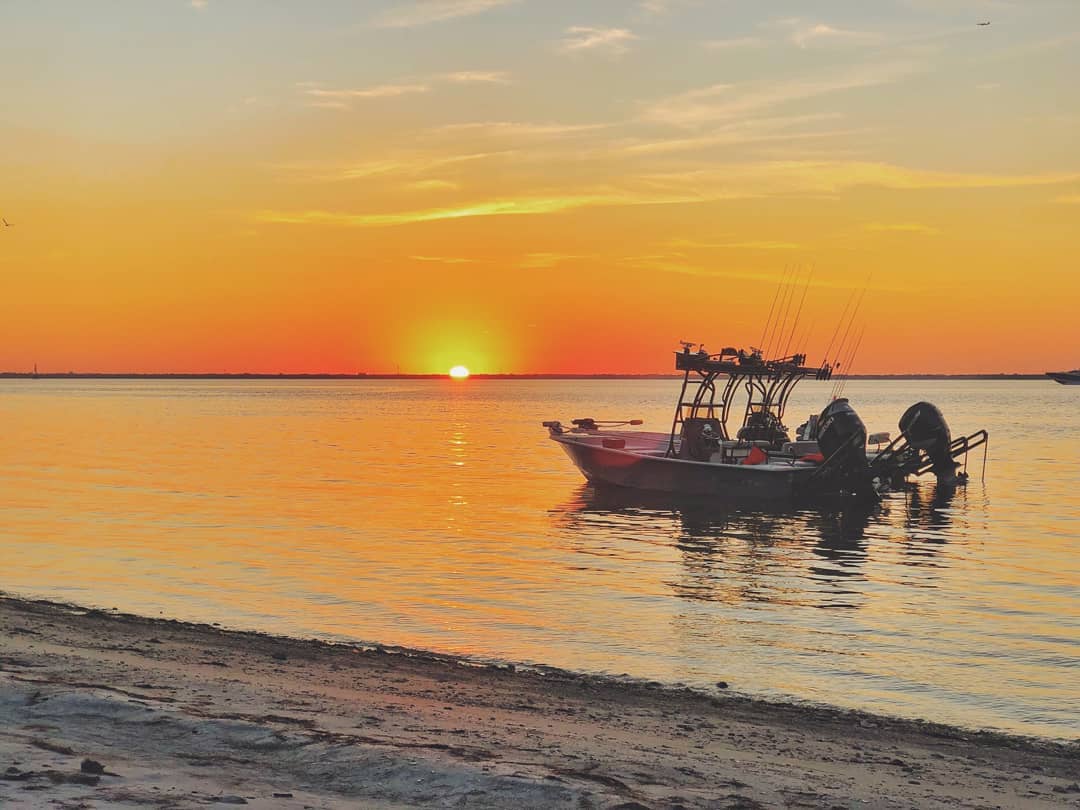
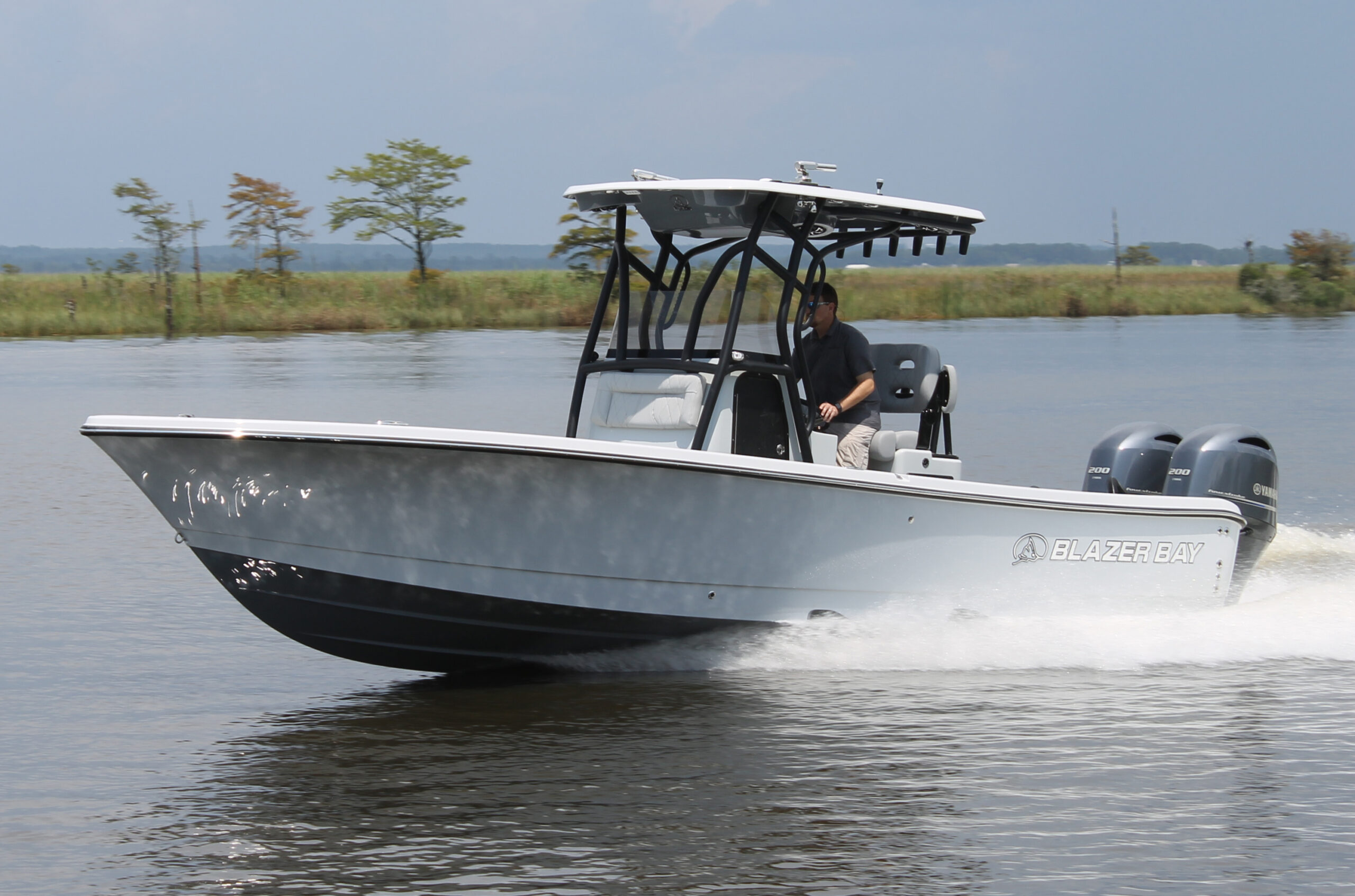
You feel it the first time your plans change with the weather. The morning starts on a shallow flat chasing redfish, then the bait stacks up outside the pass and suddenly that same day calls for a run nearshore. That is exactly where an inshore offshore hybrid boat earns its keep. It is built for anglers who refuse to choose between shallow-water fishability and the confidence to run bigger water when conditions line up.
For serious coastal boaters, this category is not about compromise for the sake of marketing. It is about smart hull design, layout decisions, and power options that let one rig cover more water, more species, and more kinds of days. If you fish hard, carry family, and want real performance instead of a one-dimensional setup, a hybrid deserves a close look.
What an inshore offshore hybrid boat really is
An inshore offshore hybrid boat sits in the middle ground between a technical shallow-water platform and a deeper-running offshore-oriented center console. It is designed to stay capable in skinny water while adding the freeboard, hull confidence, storage, seating, and ride quality needed for bays, sounds, passes, and nearshore runs.
That does not mean every hybrid does everything equally well. Some lean more inshore, with lower draft, wider forward decks, and strong sight-fishing utility. Others push harder toward offshore capability, with more bow flare, more depth inside the cockpit, and a hull that favors comfort in chop over extreme shallow-water access. The best ones are honest about where they win and where they give a little back.
For most buyers, the appeal is simple. You want one boat that can fish hard at daylight, carry the family at noon, and still have the range and ride to make a weather-window run outside the inlet when the opportunity is there.
Why more anglers are choosing an inshore offshore hybrid boat
A lot of boat owners do not need a pure flats skiff, and they do not need a full offshore center console either. They need a platform that matches how they actually boat. That usually means mixed use, mixed crew, and mixed water conditions.
A hybrid makes sense when your season includes trout and redfish on the inside, cobia or tarpon near the beach, and plenty of sandbar, cruising, and family time in between. Instead of owning a boat that shines in one lane and struggles everywhere else, you get a layout built to flex.
That flexibility matters even more for experienced buyers. Once you understand hull behavior, deck layout, and power-to-weight balance, you realize the right boat is not always the most specialized boat. Sometimes it is the one that keeps more options open without giving up the performance standards you expect.
Hull design is where the difference shows up
The biggest reason one hybrid works and another falls short is hull design. This is not a small detail. It is the whole game.
A strong inshore offshore hybrid boat usually blends a sharp enough entry to soften chop with enough beam and aft stability to stay planted while drifting, casting, or moving around the cockpit. You want a hull that carries itself confidently in a bay chop but does not feel oversized when you slide into shallower water.
Draft matters, but so does how the boat carries its draft. Some boats post a solid number on paper and still feel less nimble on the flat because of hull shape, weight distribution, or how they settle at rest. Reverse chines, deadrise balance, and the way the hull lands after crossing a wake all affect how useful the boat really is across conditions.
Ride quality matters just as much. A hybrid should not beat you up when the afternoon wind stacks the bay. The right hull runs level, tracks clean, and stays dry enough to keep the crew comfortable. That is a major difference between a boat that looks versatile in the showroom and one that actually delivers on the water.
The right layout should fish first, but not only fish
A true hybrid has to work as a fishing machine. That means usable casting decks, clean walkaround space, smart rod storage, real livewell capacity, and compartments that do not waste room. If the layout gets in the way when the bite turns on, it is missing the point.
At the same time, this class of boat wins because it does more than fish. Forward lounge seating, quality upholstery, secure backrests, and practical boarding access matter when the crew includes kids, spouses, or guests who are not out there to cast all day. The best layouts handle both jobs without feeling confused.
That balance is harder than it looks. Add too much comfort and you lose fishability. Strip too much out and the family loses interest. A well-executed hybrid keeps the cockpit open, the decks fishable, and the seating comfortable enough that a full day on the water still feels like a reward.
Power, speed, and range still matter
A hybrid boat that cannot perform is just a compromise with a nice brochure. For coastal anglers, power matters because your day may include long runs across open bays, crossing rough passes, or getting home ahead of building weather.
That does not mean every buyer needs maximum horsepower. It means the boat should be rated and rigged in a way that gives it strong acceleration, efficient cruise numbers, and enough top-end confidence to handle changing conditions. A responsive hull with the right power package feels better loaded down with gear, fuel, and people. It also gives you more authority when sea conditions get less friendly.
Range is part of the equation too. A hybrid should carry enough fuel to let you fish beyond your first stop without constantly watching the gauge. If your plan includes inside water in the morning and a nearshore move later, fuel capacity and efficiency stop being background specs and start becoming real-world advantages.
Who should buy an inshore offshore hybrid boat
This type of boat is a strong fit for anglers who fish multiple environments in a single month, or even a single weekend. If you live on the Gulf Coast, Atlantic coast, or around large inland bays and sounds, chances are your water is too varied for a one-trick platform.
It also fits buyers who care about tournament-level function but still want the boat to serve the whole household. That is a big reason this segment keeps growing. Hardcore fishability and family comfort no longer have to live on opposite ends of the market.
If you mostly pole ultra-shallow backwater creeks, a more technical inshore rig may still be the better tool. If you run far offshore regularly, a larger and deeper offshore platform is the safer call. But if your boating life sits in the wide middle – bays, flats, passes, beaches, and nearshore structure – a hybrid often makes the most sense.
What to look for before you buy
Start with your actual use, not your most ambitious day. Think about where you run 80 percent of the time, how many people usually come aboard, and whether your priority is casting space, ride comfort, or all-around versatility.
Then look closely at hull depth, draft, storage volume, seating placement, livewell design, and maximum horsepower rating. Those specs tell you whether the boat was built with real coastal versatility in mind or just dressed up to look the part.
Fit and finish count too. Saltwater hardware, dependable bilge access, quality wiring, and thoughtful rigging matter more over time than flashy options. A hybrid gets used across more scenarios than many other boats, so build quality shows up quickly.
Customization can be a major advantage here. A builder with deep experience in performance fishing boats can dial in the details that matter to your style of boating, whether that means leaning harder into angling utility, family seating, or power and electronics. That is where brands with real saltwater heritage separate themselves from the pack, and Blazer Boats has built that reputation by giving buyers a platform they can tailor without giving up ride quality or serious fishability.
The trade-off is real, but so is the payoff
No hybrid is magic. You will not get the skinniest draft of a technical skiff and the bluewater authority of a large offshore hull in the exact same package. There is always a trade-off.
The payoff is that a well-built hybrid gives you much more usable range as a boater. It opens more days, more fisheries, and more reasons to leave the dock. For a lot of owners, that matters more than being the absolute best at one narrow task.
If your ideal boat has to run shallow enough for inshore work, solid enough for rougher coastal water, and comfortable enough for family days that last from sunrise to sunset, the answer is not to force the wrong platform into the job. It is to buy a boat built for both sides of your life on the water and let that versatility work every time the forecast, the tide, or the bite changes.