
Every angler knows the feeling. You’ve found a promising stretch of shoreline, picked out the right lure, and made a handful of casts toward what looks like the perfect spot. But nothing happens.
Before changing your bait or moving to another location, consider something else: What if the problem isn’t what you’re throwing, but where you’re throwing it from?
Boat positioning is one of the most overlooked aspects of a successful fishing trip. Whether you’re chasing largemouth bass around freshwater structure or targeting redfish along coastal grass lines, the angle of your approach can make all the difference.
At Blazer Boats, we know that high performance isn’t just about getting to your favorite fishing hole. It’s about having the control and confidence to fish it effectively once you arrive.
The Perfect Cast Starts Before You Cast
Most anglers spend plenty of time thinking about lure selection, rod action, and retrieval speed. All of those things matter, but there’s another variable worth considering before your first cast: your boat’s position relative to the fish.
Think about fishing a submerged log. Casting directly across it might bring your lure through the strike zone briefly, but repositioning your boat to cast along its length could keep that lure near potential hiding places throughout much more of the retrieve.
The same principle applies to docks, grass edges, drop-offs, and other productive fishing locations.
Changing your casting angle can help you:
- Keep your lure in the strike zone longer.
- Present bait from directions fish may respond to more readily.
- Reach areas that would otherwise be difficult to target.
- Work around obstructions instead of constantly retrieving through them.
- Cover more of a promising area before moving on.
The key isn’t necessarily making longer casts. It’s making more intentional ones.
Reading the Water: Wind, Current, and Structure
Before settling into position, take a moment to observe what’s happening around you. Wind direction, water movement, and underwater features all influence where you should set up.
Let the Wind Work With You
Wind can make precise casting difficult, but it can also create fishing opportunities.
Wind-driven water movement can concentrate baitfish along certain shorelines, points, and other features, potentially attracting predatory fish.
When approaching a windblown bank, consider positioning your boat so you can maintain control with your trolling motor while working the shoreline. Facing into the wind can make controlling your drift easier, although the best casting direction will depend on the structure and how the fish are responding.
Don’t assume there’s only one correct approach. If the fish aren’t responding, changing the direction of your retrieve can sometimes make a difference.
Pay Attention to Moving Water
In rivers, tidal creeks, and coastal bays, current can be just as important as wind.
Fish frequently use current breaks, channel edges, and submerged structures to find feeding opportunities without constantly fighting the strongest flow.
For inshore anglers, a productive approach might involve positioning up-current of a grass edge or oyster bar, then working a lure naturally through the moving water.
The goal is to understand how water movement affects your presentation rather than allowing the current to dictate your every move.
Look Beyond What’s Visible
Not every productive fishing location is easy to identify from the surface.
Submerged points, channel ledges, and changes in bottom depth can all influence where fish travel and feed.
Electronics can help identify these features, but recognizing how they relate to your boat’s position is what allows you to fish them effectively.
Sometimes moving just a short distance changes how your lure travels across an underwater feature.
Freshwater and Inshore Fishing: Different Waters, Same Principles
Boat positioning matters across nearly every fishing environment, but different types of water call for different approaches.
Freshwater: Working Cover From Every Angle
For bass anglers, docks, fallen timber, vegetation, and submerged brush piles can create excellent opportunities.
Imagine approaching a dock with several pilings and a shaded area underneath. Rather than repeatedly casting toward the same corner, consider working its outer edges first before repositioning to reach the shaded areas and the spaces between pilings.
Likewise, when targeting a grass line, casting parallel to the vegetation can keep your lure near the edge longer than casting directly across it.
The idea is simple: don’t fish only the first part of the cover you can reach. Position your boat to work the entire area methodically.
Inshore: Working With the Tides
Inshore anglers face a different set of challenges.
Tidal movement, shallow flats, oyster bars, and channel transitions often determine where fish concentrate and how they approach bait.
When targeting redfish along a marsh shoreline, for example, your positioning should account for both water depth and the direction of tidal flow.
A controlled drift can allow you to cover a productive stretch without continuously operating the trolling motor. In other situations, holding position near a current seam may allow you to make several carefully placed casts.
Remember that changing tides can also change the water depth around your boat. Always maintain a safe distance from shallow obstructions and sensitive habitats.
Whether you’re fishing freshwater or saltwater, control your boat’s movement so you can control your presentation.
Boat Control: The Quiet Advantage
Once you’ve identified your target and selected your casting angle, the next challenge is holding that position.
Excessive movement can make accurate casting difficult, while unnecessary disturbance may affect fish in shallow or heavily pressured water.
Modern trolling motors, GPS anchoring systems, and shallow-water anchors can make boat positioning easier, depending on the equipment installed on your vessel.
But technology doesn’t replace good judgment.
A GPS-enabled trolling motor might hold the bow near a selected location while wind or current causes the stern to swing. Similarly, a shallow-water anchor can help secure a boat in suitable conditions, but its effectiveness depends on depth, bottom composition, and the equipment’s operating limits.
Understanding these limitations helps you plan your approach before making your first cast.
When conditions allow, make small, deliberate adjustments rather than constantly repositioning. Keep enough distance from your target to avoid disturbing it while maintaining an effective casting range.
Your goal should be to spend more time fishing and less time correcting your boat’s position.
Where Your Boat Makes a Difference
Boat positioning is ultimately a skill, but having a fishing platform suited to your environment makes practicing that skill easier.
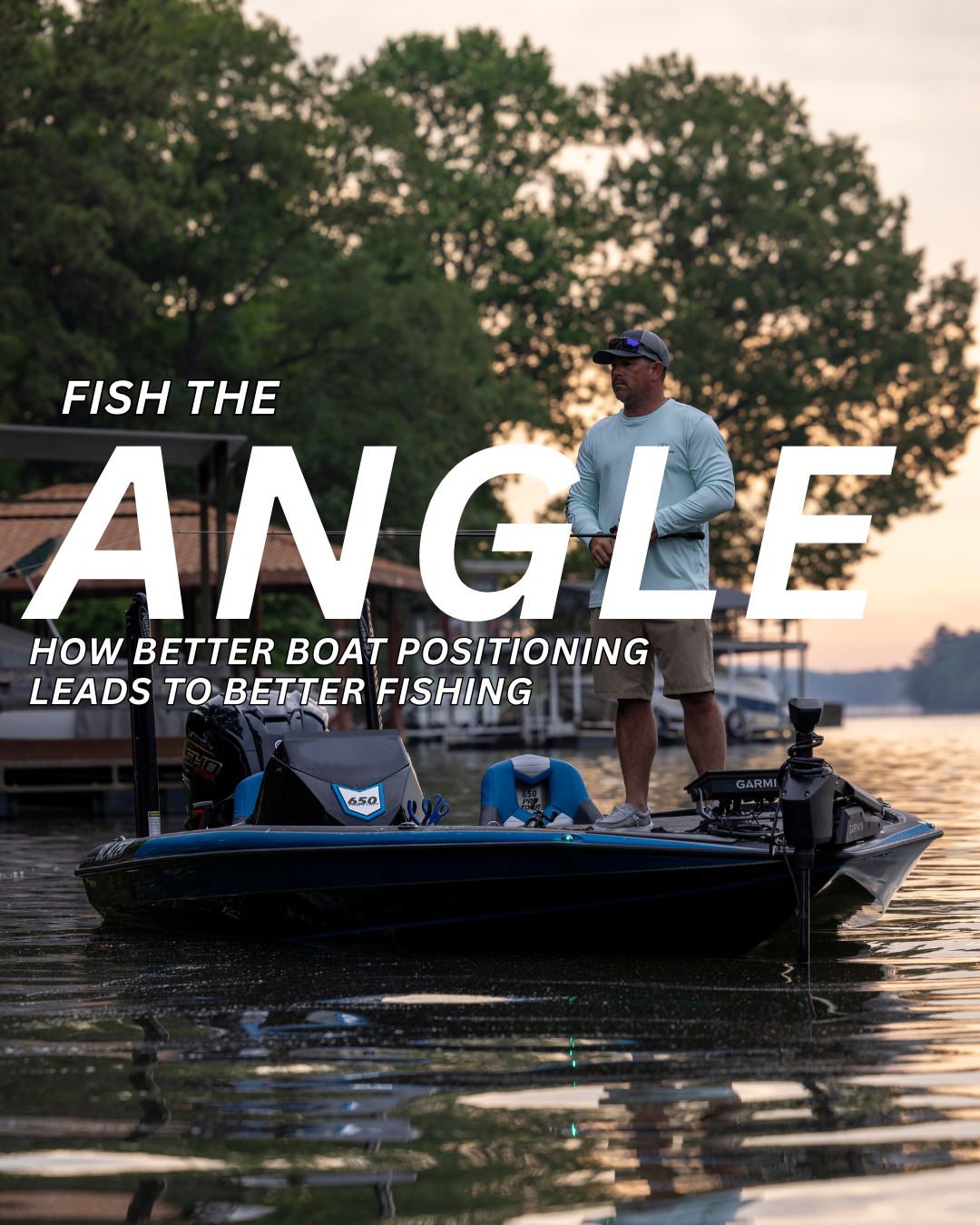
For freshwater bass anglers, boats like the Blazer 650 Pro Tour offer tournament-focused layouts, generous deck space, and customization options that include trolling motor and shallow-water anchoring equipment.
That combination gives anglers flexibility when approaching docks, vegetation, and underwater structure.
For coastal anglers, the Blazer Bay 2700 Hybrid offers a large forward casting deck and a design intended for both inshore and nearshore fishing. Having room to move around the deck and manage your equipment helps when adapting to different fishing situations.
Different waters demand different tools, but the philosophy stays the same: a well-designed boat should support the way you fish.
Put It Into Practice on Your Next Trip
You don’t have to overhaul your fishing strategy to improve your boat positioning.
The next time you approach a promising spot, pause before making that first cast.
Look at the direction of the wind or current. Identify the cover or structure you want to target. Consider how your lure will travel through the area, then position your boat accordingly.
If your first few presentations aren’t productive, experiment with another angle before abandoning the location entirely.
Pay attention to which approaches produce bites and which ones don’t. Over time, you’ll start recognizing patterns that help you make better decisions on the water.
Sometimes the difference between an unproductive spot and a great fishing opportunity isn’t a new lure, a longer cast, or a different destination.
Sometimes, it’s simply a better angle.
Built for the Way You Fish
At Blazer Boats, we’ve spent decades building high-performance bass and bay boats for anglers who take their time on the water seriously.
From tournament-ready bass boats to versatile coastal fishing platforms, our lineup is designed to help you make the most of every opportunity.
Explore our Bass Boats and Bay Boats to discover the right platform for your next adventure.
Blazer Boats — High Performance Boats for High Performance Anglers.