
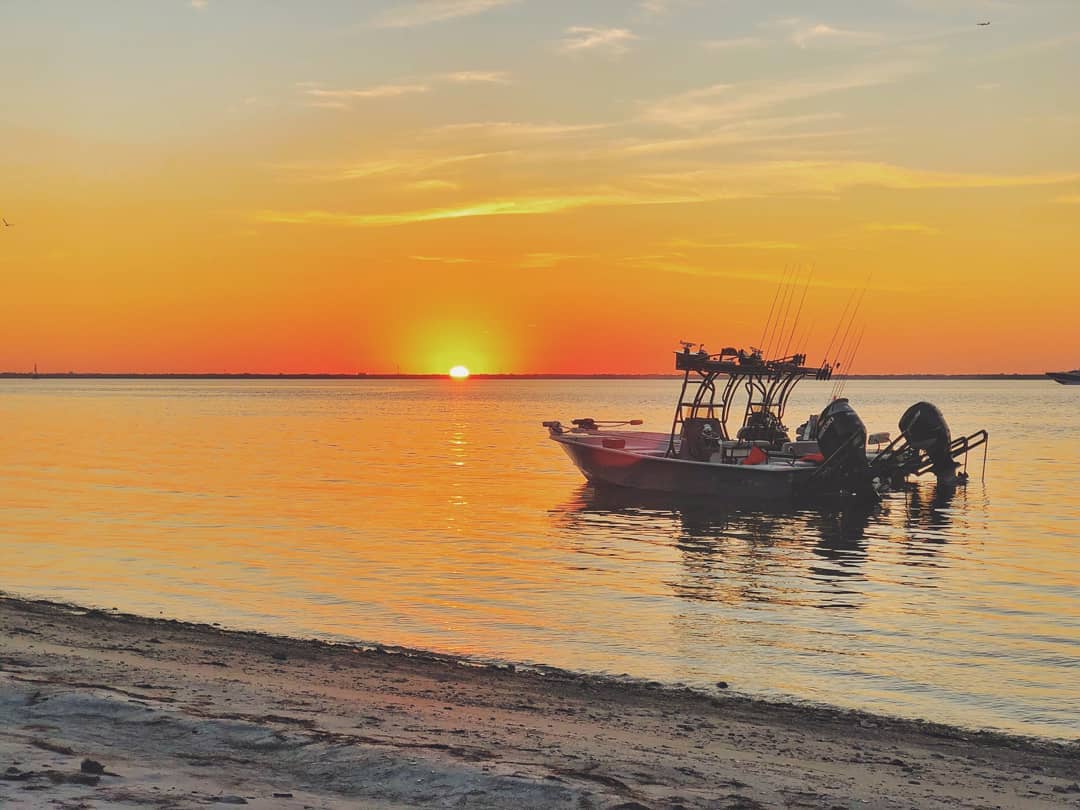
It’s tournament morning. The sun is just beginning to break over the water, your livewells are empty, your fuel tank is full, and your rods are rigged for the day ahead. You’ve spent hours studying the conditions, dialing in your electronics, and preparing your tackle. Everything is ready.
But have you considered how the weight inside your boat might affect its performance?
When a bass boat feels sluggish getting on plane or isn’t handling quite the way it should, it’s natural to start thinking about propellers, engine trim, or motor setup. Those factors certainly matter, but there’s another variable that’s easy to overlook: how your equipment is distributed throughout the boat.
At Blazer Boats, performance has been part of our DNA since 1978. Our hulls are designed with speed, precision, and serious anglers in mind. But even a high-performance bass boat benefits from thoughtful organization.
From your heaviest tackle boxes to your rod lockers and batteries, here’s how strategic storage can help you get the most out of your Blazer on tournament day.
Finding the Balance: Bow vs. Stern
Every piece of equipment you bring aboard contributes to your boat’s overall weight and balance. Where that weight sits can influence how the hull responds during acceleration, how quickly it gets on plane, and how efficiently it runs.
The key is understanding the relationship between your bow and stern.
Too much weight in the bow can cause the front of the boat to ride lower than intended. That can increase the amount of hull in contact with the water, create additional drag, and affect handling.
Too much weight in the stern, meanwhile, can cause excessive bow rise during acceleration. With more weight concentrated near the transom, the boat may take longer to climb onto plane.
Neither extreme is ideal. The goal is to find a practical balance that works with your boat’s hull design, equipment, and typical tournament load.
Put Your Storage to Work
A few simple adjustments can make a difference:
Be selective with forward storage. Avoid concentrating unusually heavy items, such as spare propellers, oversized tool kits, or large collections of soft plastics, in the farthest forward compartments.
Keep dense equipment closer to the middle when practical. Terminal tackle, jig heads, and other compact, heavy supplies are good candidates for secure storage nearer the boat’s center.
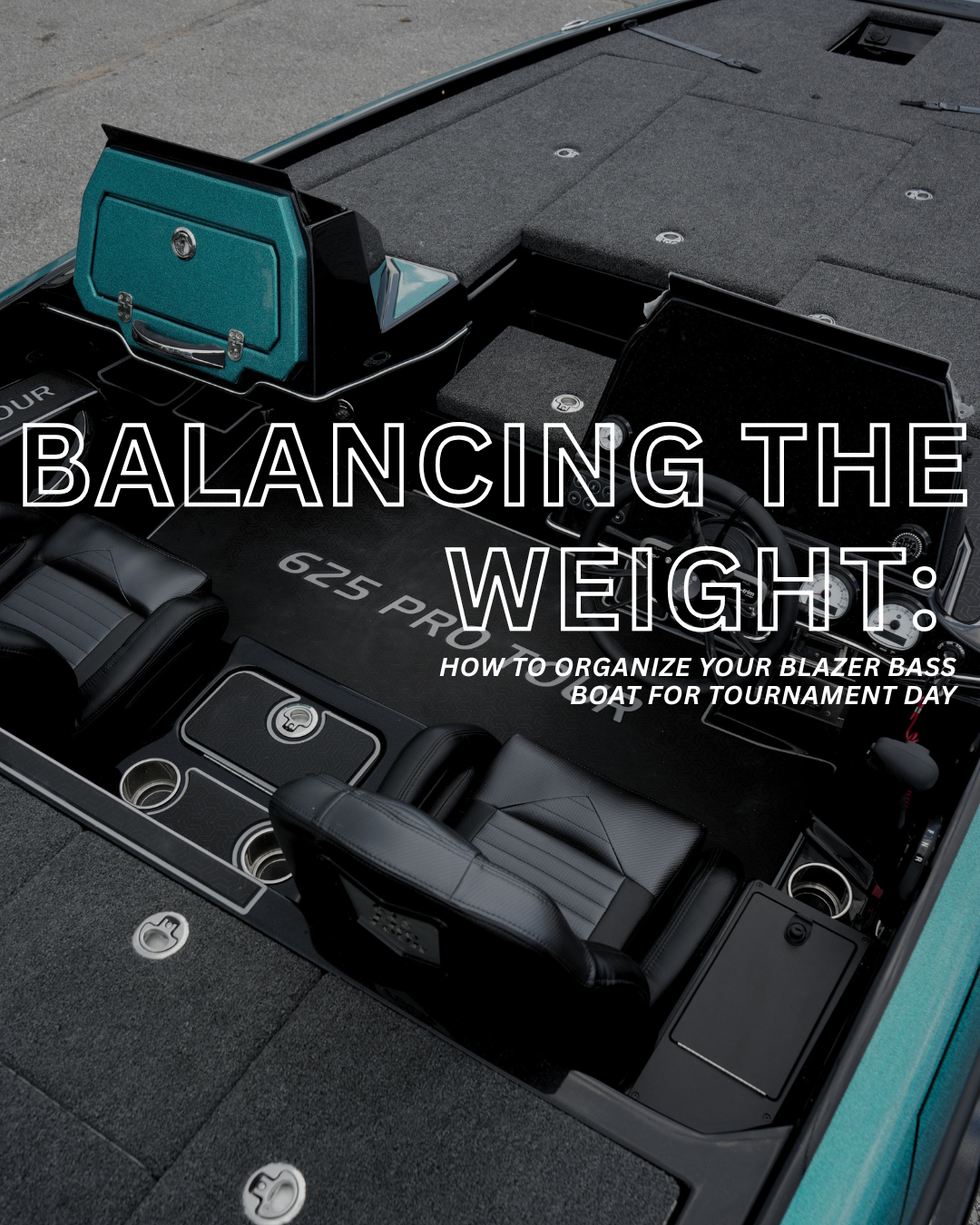
Use your center tackle compartment strategically. Models like the Blazer 625 NAP and 650 Pro Tour offer dedicated tackle storage that helps keep equipment organized and accessible. Consider the placement of heavier boxes within those compartments rather than simply filling every available space.
Secure everything before running. Loose equipment can shift during acceleration, turns, or rough-water operation, affecting balance and creating unnecessary hazards.
Remember, there’s no universal storage arrangement that delivers the perfect hole shot. Your engine setup, propeller, trim, passenger load, and water conditions all contribute to how your boat performs.
The best approach is to start with a properly loaded boat, follow your manufacturer’s recommendations, and evaluate small adjustments under safe operating conditions.
Port vs. Starboard: Balancing the Solo Angler
Here’s something tournament anglers sometimes overlook: you’re part of the boat’s weight distribution, too.
Most bass boats have their driver’s console on the starboard, or right-hand, side. When you’re fishing alone, your body weight naturally puts more load on that side of the vessel.
Add a full complement of electronics, tackle, and equipment, and an uneven load can influence how the boat sits in the water.
That doesn’t necessarily mean your boat will handle poorly, but maintaining reasonable side-to-side balance is worth considering.
The Counterweight Strategy
If you’re regularly fishing solo, take a closer look at where your gear lives.
Storing some of your heavier utility boxes and tools in port-side compartments may help offset the weight of the driver. Start with small changes rather than attempting to match your body weight pound for pound.
And remember, your ideal arrangement can change when someone else climbs aboard.
Fishing with a co-angler? The addition of a passenger changes your boat’s loading. An arrangement that works well for solo trips may need adjustment when another angler, their tackle, and their equipment come along.
Pay attention to how your boat sits at rest and how it responds underway. If you encounter persistent leaning, unusual handling, or chine walk, consult a qualified dealer or marine technician rather than relying on tackle placement alone.
A little planning at the dock can go a long way toward creating a more consistent experience on the water.
Zero Minutes Wasted: Build a Tournament-Ready Tackle System
Of course, performance isn’t just about getting to your fishing spot.
It’s also about what happens once you get there.
Picture this: you’ve found an active school of fish, and they’re responding to one particular presentation. You reach for a different color or weight, only to discover that the tackle you need is buried beneath three boxes of crankbaits and a pile of soft plastics.
By the time you find it, the bite may have changed.
An organized tournament layout helps eliminate that frustration.
Organize by Situation, Not Just Lure Type
Most anglers organize tackle into categories: crankbaits in one box, jigs in another, soft plastics somewhere else.
That system works, but tournament fishing often rewards a more situational approach.
Consider creating smaller, dedicated collections based on how and where you fish:
Confidence Baits: Your most dependable lures and presentations, positioned for quick access.
Shallow-Water Attack: Topwaters, spinnerbaits, and other go-to options for working grass lines, docks, and shallow cover.
Offshore Essentials: Deep-diving crankbaits, football jigs, and terminal tackle for working structure.
Finesse Solutions: Drop-shot supplies, finesse worms, and lighter presentations for pressured fish or difficult conditions.
Keep the tackle you’re most likely to use in accessible compartments, with less frequently needed supplies organized farther away.
The Blazer 650 Pro Tour and 625 NAP offer generous storage options that make it easier to develop a system around your fishing style.
Don’t Forget Your Rod Lockers
Your rods deserve just as much attention as your tackle.
Rod sleeves can help reduce tangles and protect guides when multiple setups are stored together. Staggering reel positions, grouping rods by length or technique, and returning each setup to a consistent location can also make a difference.
The goal is simple: when it’s time to change presentations, you should know exactly where your next rod is.
A well-organized boat won’t catch fish for you, but it can help you spend more time fishing and less time searching.
Modern Batteries, Electronics, and Rigging
Bass boat equipment has changed significantly over the years, and one of the biggest developments has been the growing popularity of lithium iron phosphate (LiFePO4) batteries.
Compared with traditional lead-acid options, many lithium battery systems offer substantial weight savings.
For anglers upgrading their trolling motor battery bank, that reduction can change the weight distribution of the boat, particularly when the original batteries were installed near the stern.
Lighter Doesn’t Always Mean Better Balanced
Removing weight from the back of your boat can influence how it sits and runs. Depending on the original configuration, you may notice changes in acceleration, running attitude, or handling.
However, that doesn’t automatically mean you should compensate by loading more tackle elsewhere.
Instead, reassess your overall equipment layout and evaluate the boat’s behavior with its new configuration.
Any lithium conversion should also account for battery compatibility, charging requirements, battery management systems, and the recommendations of your boat and electrical equipment manufacturers. When in doubt, work with a qualified marine technician.
Keep Critical Systems Accessible
Modern bass boats depend on more electronics than ever, from advanced fish finders to trolling motors and shallow-water anchors.
The Blazer 625 NAP and 650 Pro Tour include Sea Clear power harness systems, designed to support reliable power delivery to marine electronics.
Regardless of your equipment package, keep electrical connections and service points accessible for inspection and maintenance.
The same principle applies to your bilge area. Avoid storing loose tackle or equipment where it could interfere with pumps, wiring, or other critical components.
Tournament preparation isn’t just about what you can fit aboard. It’s about ensuring everything you bring has a safe, functional place.
Build Your Layout Around the Way You Fish
There isn’t one perfect tackle configuration for every angler.
Someone who spends most of their time flipping shallow vegetation has different equipment needs than an angler who primarily targets offshore structure. A solo tournament competitor may organize their boat differently from someone who regularly fishes with a partner.
Your storage system should reflect those differences.
Before your next tournament, take a few minutes to evaluate your setup:
Is your heaviest movable equipment stored securely and reasonably balanced?
Can you access your confidence baits without digging through multiple compartments?
Are your rods protected, organized, and easy to retrieve?
Have you accounted for passengers, fuel, and livewell water?
Can you reach essential safety equipment and maintenance areas without unloading half the boat?
Small improvements to your organization can make tournament mornings smoother and long days on the water more enjoyable.
And when your layout works with your boat instead of against it, you can spend less time thinking about equipment and more time concentrating on the next cast.
Performance Starts with Preparation
At Blazer Boats, we believe every detail matters.
From the design of our high-performance hulls to the storage compartments built into our tournament-ready bass boats, our goal is to give anglers the tools they need to perform at their best.
But the way you organize and operate your boat matters, too.
A thoughtful setup supports predictable handling, efficient use of space, and quicker access to the equipment you rely on most. Whether you’re preparing for a major tournament or heading out for a weekend on your favorite lake, those advantages are worth the effort.
Ready to experience a Blazer built for tournament fishing?
Explore the deck space, storage, and performance-focused design of the Blazer 625 NAP and 650 Pro Tour, and see how the right boat can complement the way you fish.
Find an Authorized Blazer Dealer or explore the Blazer lineup and build your next boat today.
Blazer Boats. Built for the way you fish.