
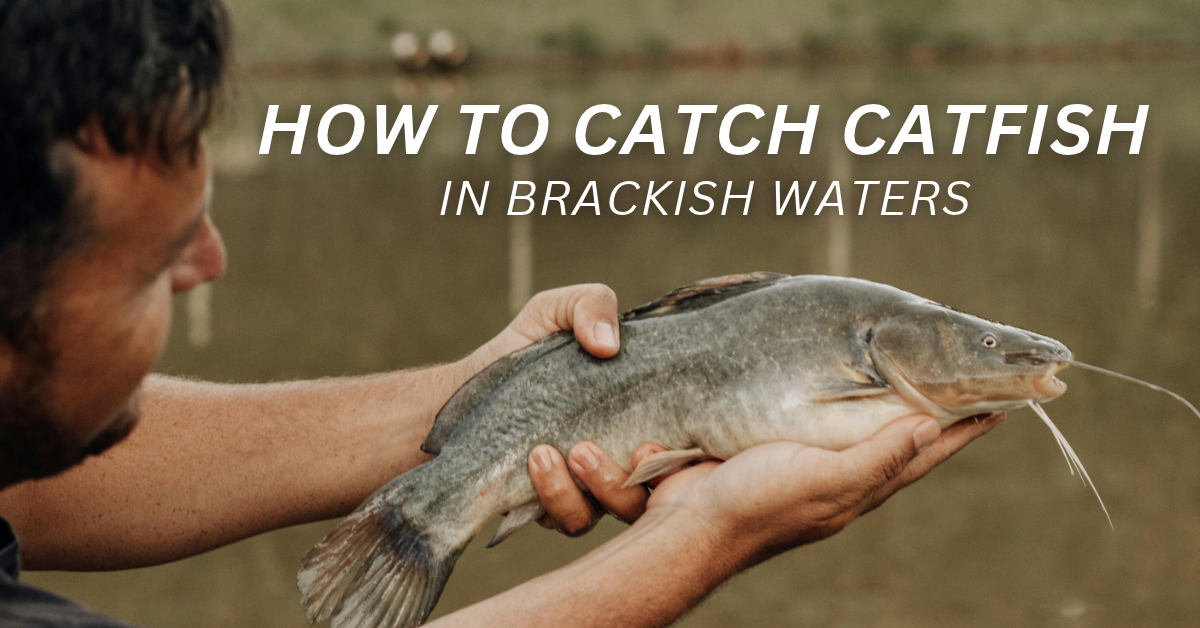
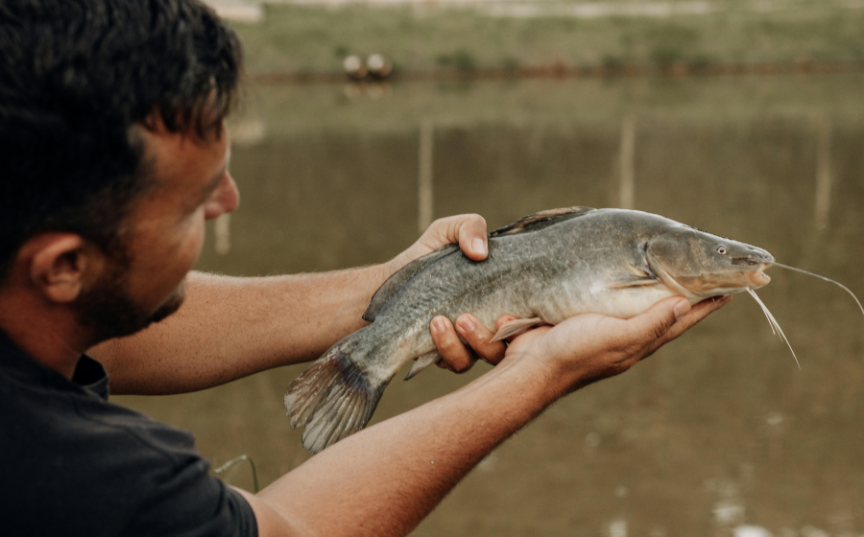
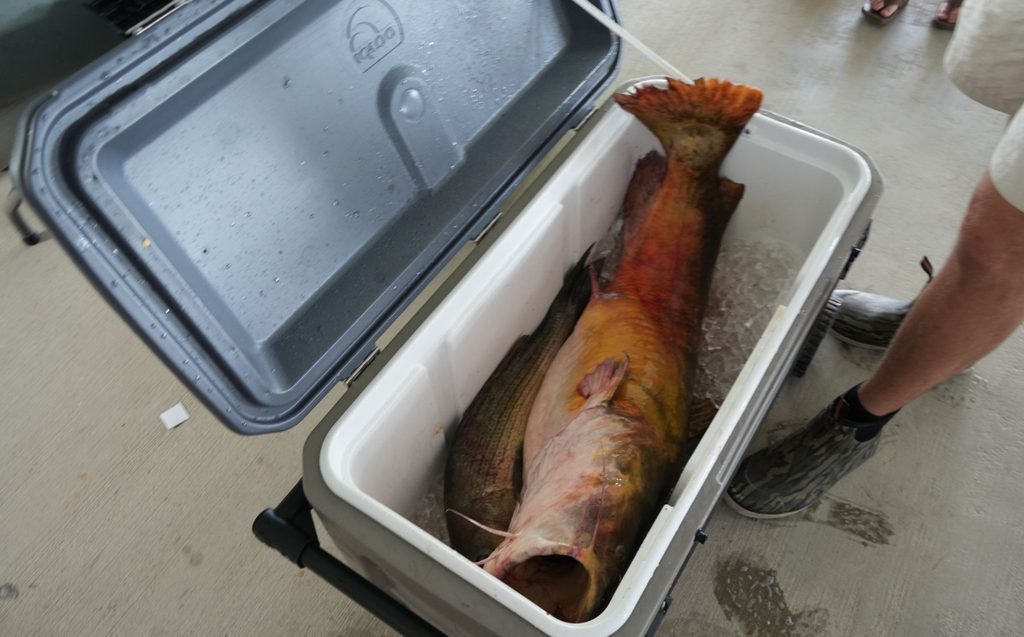
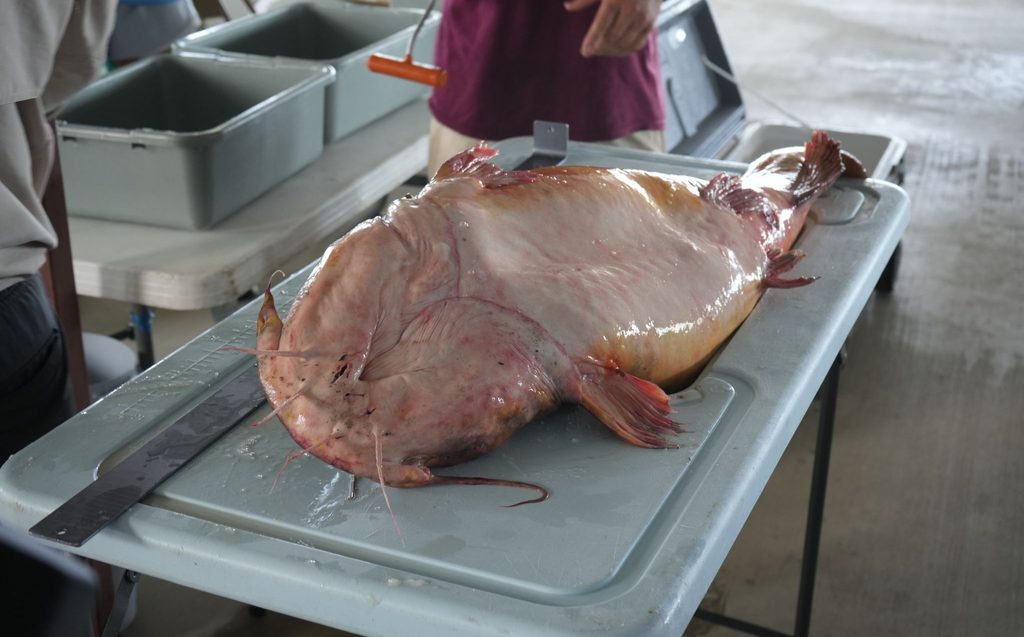
One of the most popular species of fish to catch is Catfish, and it is clear to see why. Catfish are native to freshwater environments on nearly every continent. With over 3,000 species worldwide, it’s clear to see why they have become a delicacy the world over.
In North America, you can find catfish from Southern Canada all the way down to Guatemala, making the United States one of the richest fishing grounds for catfish in the world. There are several rich river basins in the United States including the Mississippi River, Missouri River, Ohio River, and the Rio Grande. All of these areas are native to several catfish species including channel catfish, blue catfish, flathead catfish, bullheads, and madtoms.
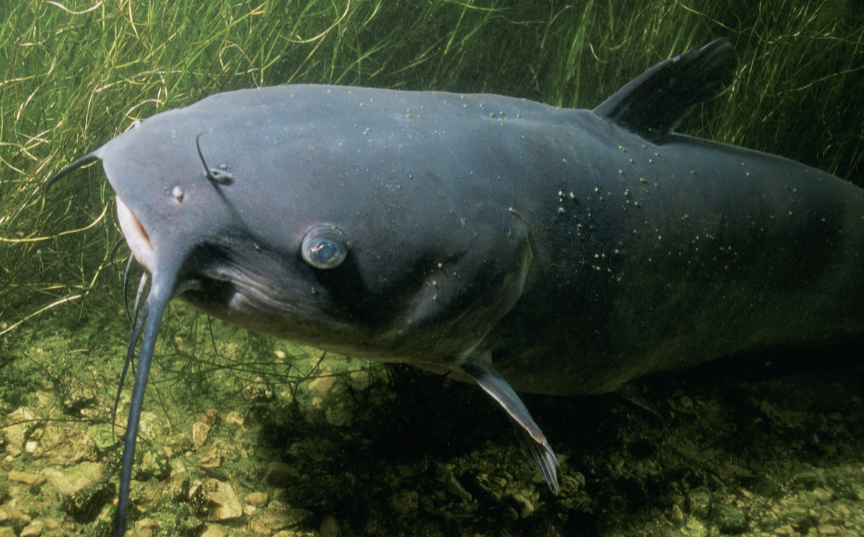
Since all of these species of catfish share a common family (Ictaluridae), they share common traits that can be used to tailor our fishing strategies. Here, we will look at how to catch catfish by analyzing the main factors at play: time, place, bait, tackle, rigging, and equipment.
Time and Place
When catching any kind of fish, it is important to understand their typical swimming patterns throughout the day. This means studying the places they migrate to and from and tracking the times they move between locations.
When it comes to time of day, catfish are most active in the mornings, evenings, and nights. They tend to be active starting about an hour before peak high tide until an hour after the tide begins to fall.
As for where to catch catfish, like to gather in deep channels and drop-offs due to the cooler waters in these locations. They also cluster in large bayous, along the edges of marshes, and along bridge causeways. Baitfish tend to stack up along eddies or breaks in the current, naturally drawing their predator – catfish – to these areas.
When tracking baitfish, it is important to make sure you track species that catfish are naturally drawn towards. That is where picking the proper bait comes into play.
Best Bait
When using live bait, it is important to use something close to what is native to the ecosystem. This increases the effectiveness of your fishing strategy, as catfish in the area are more likely to recognize prey animals from their natural habitat.
When fishing in brackish waters, shrimp are particularly strong as a bait choice. Saltwater shrimp species like brown, white, and pink shrimp are naturally drawn to brackish waters close to shorelines as these areas provide crucial nursery grounds during their juvenile life stages. That makes catfish their natural predator, and thus makes shrimp a fantastic prey to use as bait.
Additionally, using pieces of mullet, shiners, or menhaden can work well as an alternative to shrimp. These tend to work well when the brackish water has a higher percentage of freshwater compared to saltwater, while shrimp tends to be more effective when brackish water is particularly salty.
Tackle, Rigging, and Equipment
Now that we have the where, the when, and the what, all that is left is the actual “how” in how to catch catfish. That is where setting up your rig and equipment becomes incredibly important.
Using a bottom-fishing setup is instrumental to catching catfish in brackish waters. One example of a bottom-fishing setup is using a single-drop leader or Santee rig with a weight of 1-2 ounces to keep your bait anchored low along the bottom of the current.
As for picking out a fishing hook, wide-gap or circle hooks tend to work best when catching catfish. Make sure the hook you use matches your bait and doesn’t cause your bait to break apart or slip off of the hook. Additionally, if you are reeling in with a circle hook, make sure to not jerk the rod. Instead, lift your line firmly and start reeling in when the fish bites.
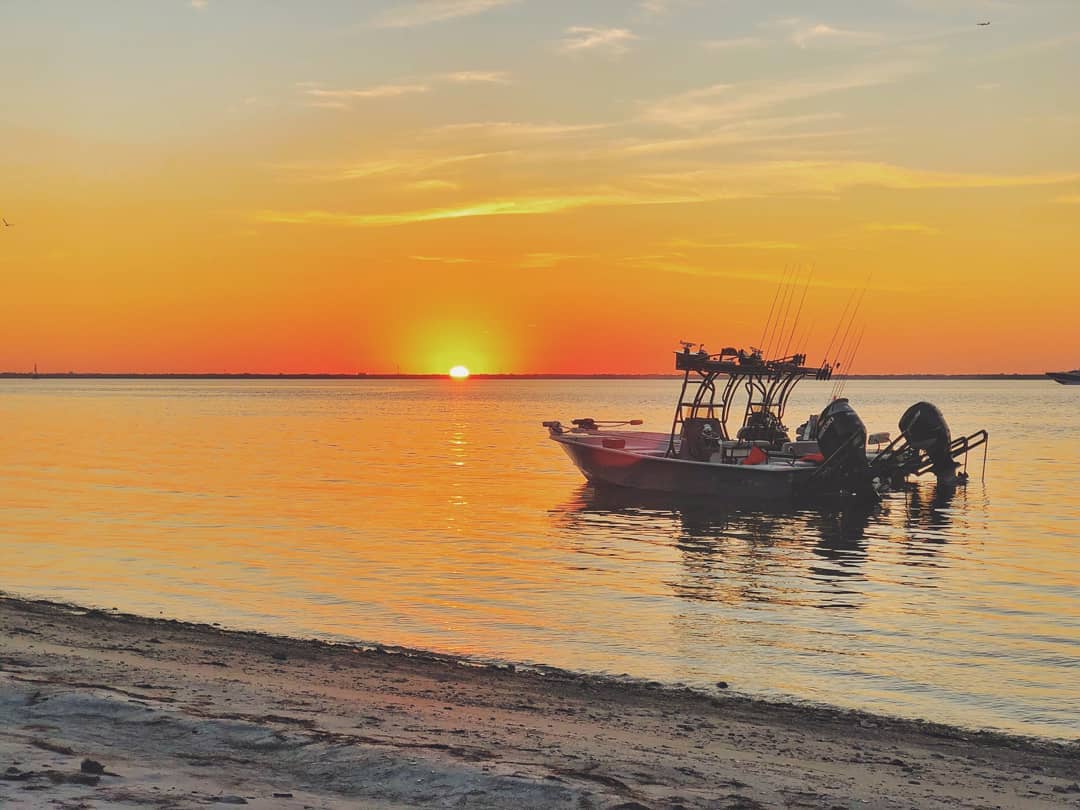
Lastly, one of the most important pieces of fishing equipment is the boat you ride to your fishing hole. In brackish waters, choosing a boat that is able to adapt to both salt and freshwater terrains is ideal. For example, the Blazer Bay 2550 GTS and 675 Ultimate Bay offer fishing-first layouts with large, stable casting platforms and plenty of storage to stow away your catch and equipment.
However, for anglers that are more focused on the saltwater side of things, models like the Purebay 2400 and 2200 are flexible in brackish waters but best suited in bay fishing environments. Alternatively, those more focused on fishing in freshwater lakes and rivers with the occasional trip into brackish waters would do well with a bass boat, especially the 650 and 625 Pro Tour.
Whether you are an angler along the coast looking to venture into brackish waters or a native to catfish-rich river basins, Blazer Boats has a model tailored to suit your needs. Learn more about our bay boat and bass boat lineup by visiting our digital boat catalogs.