
To catch redfish consistently, focus on fishing shallow flats, oyster bars, and grass beds during moving tides using live bait like finger mullet or blue crab, or artificial lures like gold spoons and soft plastics. Success comes down to reading the water, making accurate casts, and having a boat that can get you into the skinny water where these copper-colored fighters live.
Redfish rank among the most popular inshore species in the United States for good reason. They’re aggressive feeders, hard fighters, and they live in some of the most beautiful coastal waters you’ll ever fish. From the marshes of Louisiana to the flats of Florida and the Carolina coastline, red drum keep anglers coming back season after season.
Learning how to catch redfish takes time on the water, but understanding their habits and having the right approach will shorten your learning curve. This guide covers the tactics, tackle, and techniques that consistently put slot reds in the boat.
Understanding Redfish Behavior
Redfish are opportunistic feeders that use their downward-facing mouths to root along the bottom for crustaceans, baitfish, and mollusks. That lateral line running along their sides helps them detect vibrations in murky water, which is why noisy lures like popping corks work so well.
Where Redfish Live
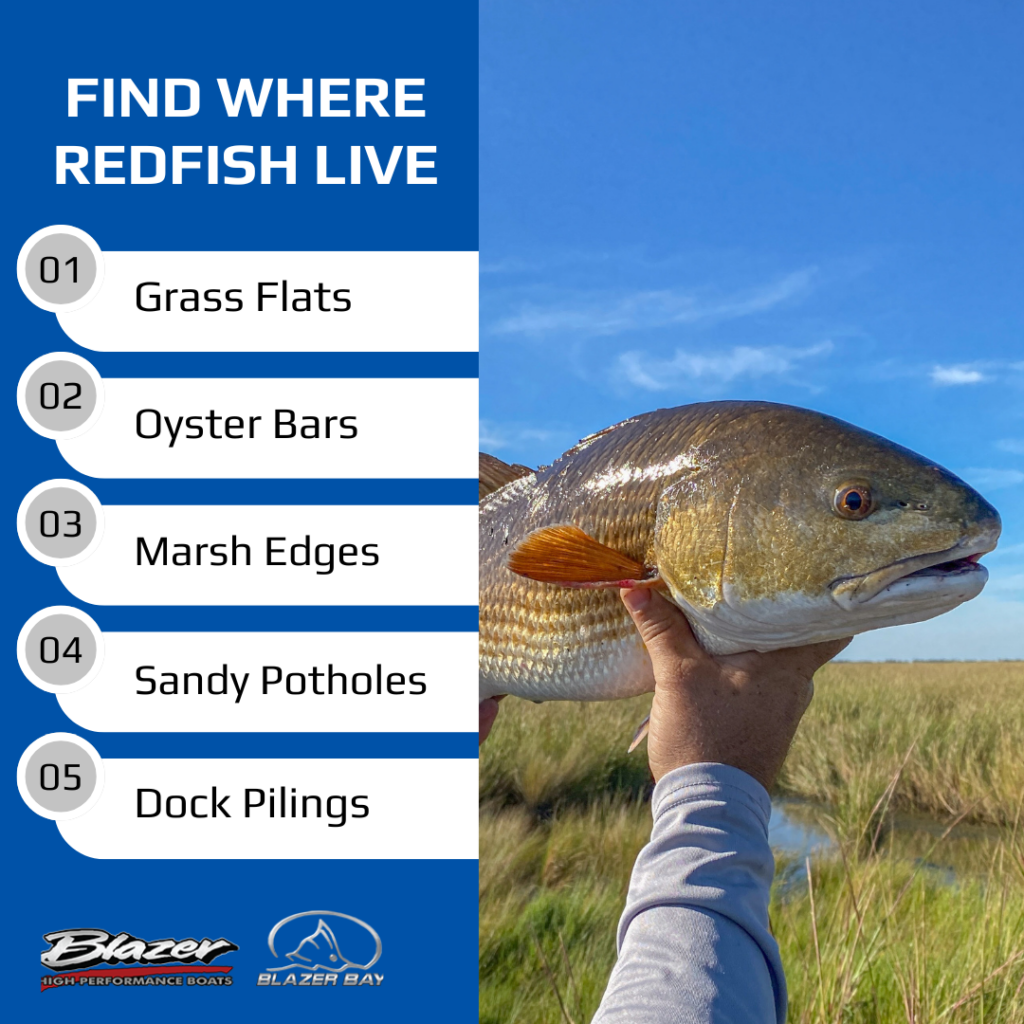
Red drum inhabit a range of coastal environments:
- Grass flats: Prime feeding grounds where redfish hunt shrimp and small crabs
- Oyster bars and oyster beds: Structure that holds bait and provides ambush points
- Marsh edges: Especially during flood tide when water pushes baitfish into the grass
- Sandy potholes: Light-colored depressions in grass flats where reds often feed
- Dock pilings and bridges: Urban structure that attracts baitfish
Seasonal Patterns
Water temperature drives redfish behavior throughout the year. In spring and fall, you’ll find them aggressively feeding in shallow water as comfortable temperatures keep them active. Summer heat pushes them deeper or into shaded areas during midday, making early morning and evening your best windows. Winter fishing can be excellent on warmer days when reds move onto sun-warmed flats.
Bull redfish, those trophy fish over 27 inches, tend to school up in the fall near passes and inlets as they prepare for their offshore spawning migration. Puppy drum and slot reds stay in the estuaries year-round in most Gulf and Atlantic coastal areas.
Best Baits and Lures for Redfish
Live Bait Options
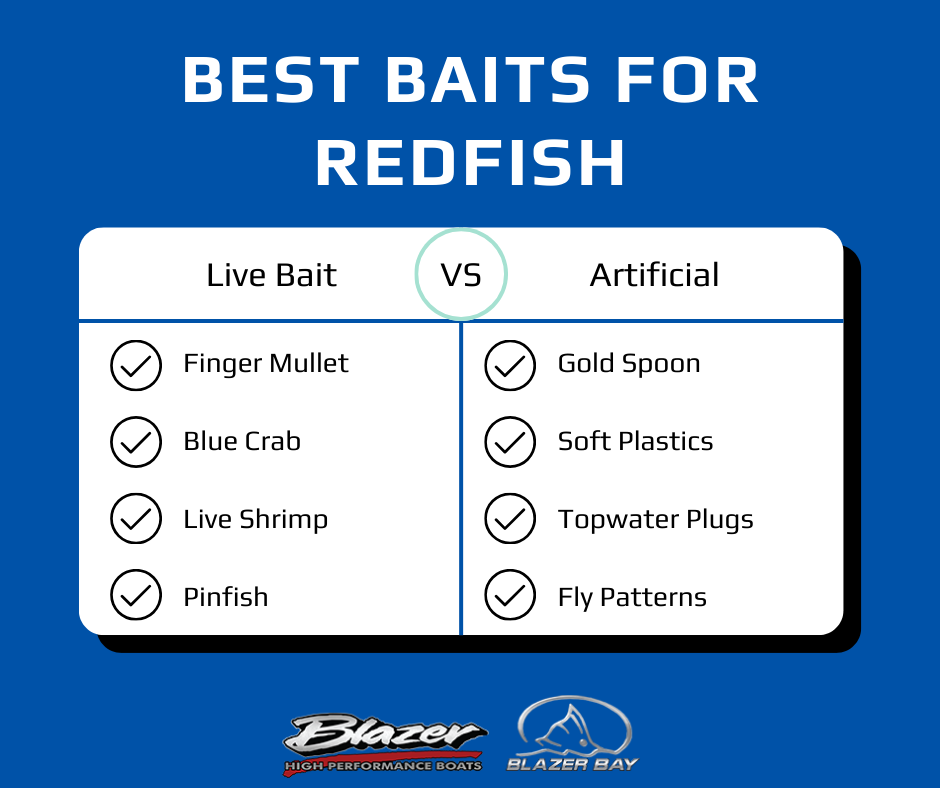
Nothing beats live bait when redfish are being picky:
- Finger mullet: A top choice that reds can’t resist, fished under a popping cork or free-lined
- Blue crab: Quarter a crab and fish it on the bottom near oyster beds
- Live shrimp: Versatile and effective, especially under a popping cork
- Pinfish and pigfish: Cut or live, these work well for bigger bull reds
Use a circle hook when fishing live bait. It improves hookup rates and makes releasing undersized or oversized fish easier, since the hook typically catches in the corner of the mouth.
Artificial Lures
When you want to cover water or when live bait isn’t available:
- Gold spoon: The classic redfish lure. A weedless gold spoon worked over grass flats triggers reaction strikes
- Soft plastic paddletails and jerkbaits: Work these slowly along the bottom or under a popping cork
- Topwater plugs: During low light conditions, the explosion of a redfish on top is hard to beat
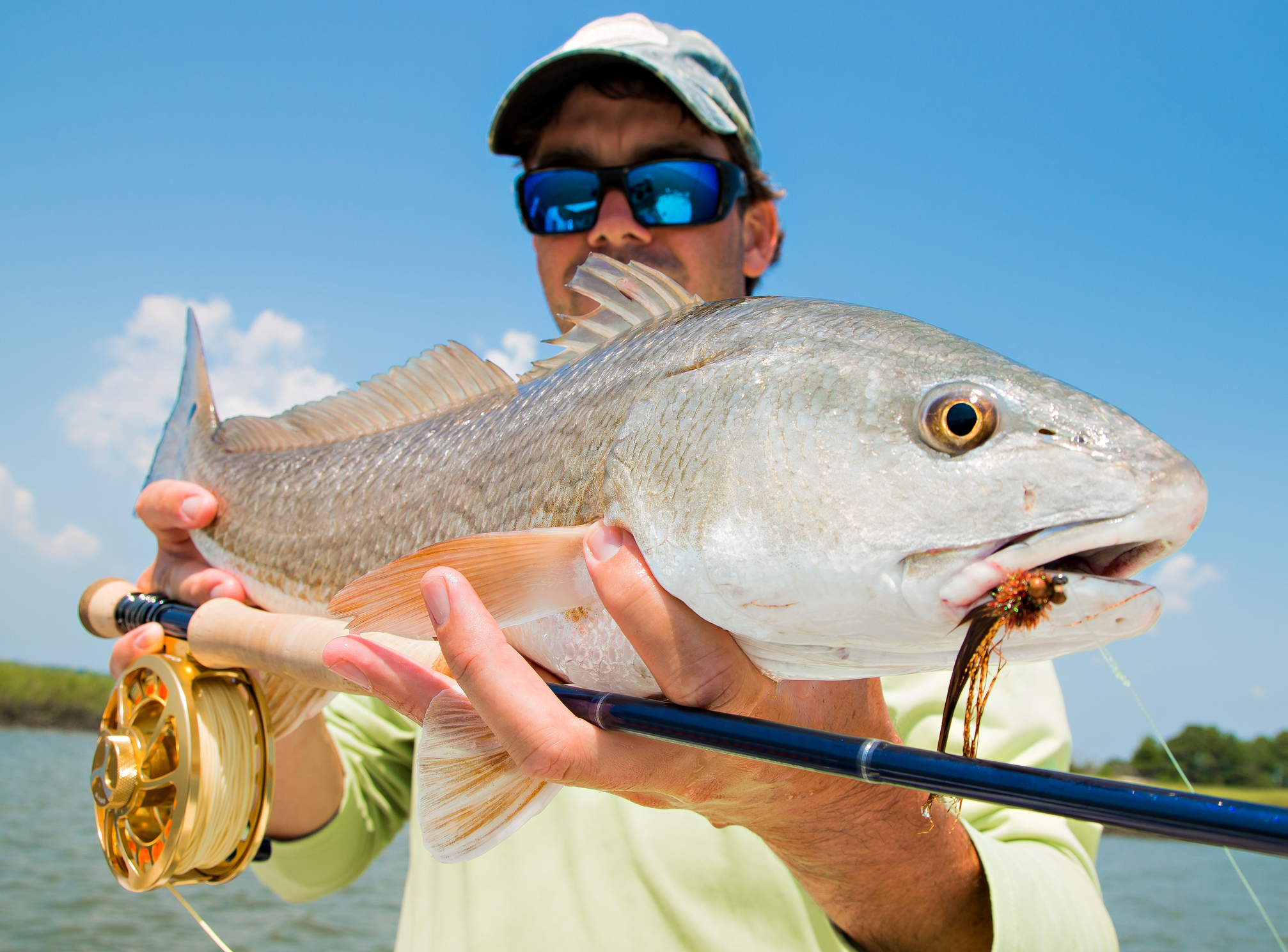
- Fly rod patterns: Crab and shrimp imitations in sizes 2 to 2/0 work well for fly fishing anglers
The popping cork deserves special mention. This float creates a commotion on the surface that mimics feeding activity, drawing curious redfish from a distance. Suspend your bait or soft plastic 18 to 24 inches below the cork and work it with sharp pops followed by pauses.
Techniques That Work
Sight Fishing
In clear water, sight fishing for redfish is about as exciting as inshore fishing gets. Look for tailing fish with their coppery tails waving above the surface as they root for crabs. Pushing wakes in skinny water give away cruising reds. A quality poling platform lets your fishing partner position the boat silently while you prepare for the shot.
Sight fishing demands accurate casts. Lead the fish by several feet and let your bait or lure sink into their path. Casting directly at a redfish usually spooks it.
Working Structure
Oyster bars concentrate redfish, especially during moving tides. Position your boat up-current and let baits drift naturally toward the structure. A knocker rig with cut bait works well here, keeping your offering near the bottom where reds expect to find food.
During low tide, fish the edges of bars where deeper water meets the exposed shell. High tide opens up the tops of bars and allows reds to move up and feed on the crabs and oysters living there.
Wade Fishing
Wading lets you access areas too shallow for most boats and approach fish quietly. Work grass flats methodically, making fan casts to cover water. The slower pace of wade fishing often produces better in pressured areas where boat traffic keeps fish on edge.
Timing Your Fishing Trip
Tide Strategy
Moving water triggers redfish feeding activity. Many experienced anglers consider the two hours before and after a tide change to be their favorite time to target reds. Incoming tides push baitfish onto flats and into marshes, with redfish following close behind. Outgoing tides concentrate fish in drains and deeper cuts as water leaves the flats.
Flood tide fishing, when water rises high enough to flood the grass, creates some of the best sight fishing opportunities of the year. Reds push way up into the marsh to feed on fiddler crabs, often in water barely deep enough to cover their backs.
Time of Day
Low light periods produce the most consistent action. Redfish feed confidently during dawn and dusk when they feel less vulnerable to predators. Midday fishing can still produce, especially on overcast days or when targeting fish holding in deeper water or around heavy structure.
Tackle Recommendations
A medium to medium-heavy spinning or baitcasting rod in the 7-foot range handles most redfish situations. Spool with 15 to 20 pound braided line and add a 20 to 30 pound fluorocarbon leader. The braid gives you sensitivity to detect subtle bites while the leader provides abrasion resistance around oysters and other structure.
For fly fishing, an 8-weight outfit handles slot reds well, though serious anglers targeting bull reds often step up to a 9 or 10 weight.
Electronics
Modern mapping tools help locate productive structure. A quality fishfinder shows you the water column and bottom composition, while detailed charts reveal oyster beds, grass edges, and depth changes that hold fish.
Getting Into Position
Having a boat that can run shallow and operate quietly makes a significant difference in redfish success. These fish live in skinny water, and spooking them with a loud approach or getting stuck short of the prime spots means missed opportunities.
A quality trolling motor lets you ease into casting range without alerting fish to your presence. On the flats, being able to position silently while sight fishing separates productive trips from frustrating ones.
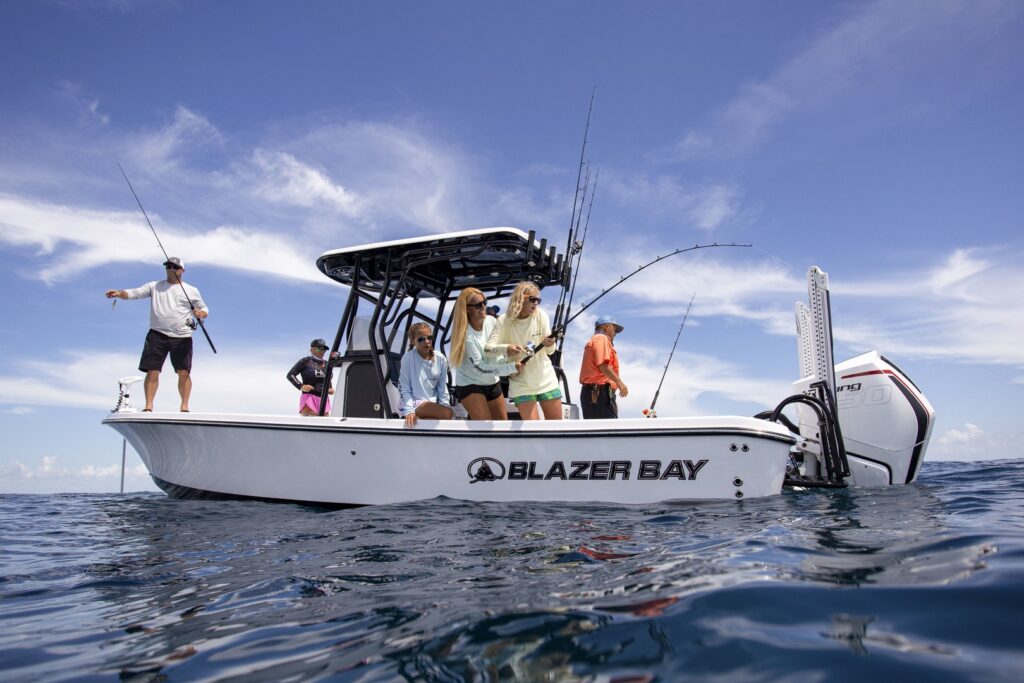
Experience Redfish Country in a Blazer
At Blazer Boats, we build bay boats specifically for the demands of inshore fishing. Our shallow draft hulls get you into the backwater haunts where redfish live, while our performance-focused designs let you run to distant flats before other anglers arrive. Blazer has been hand-building boats in Pensacola, Florida since 1978, and we understand what serious inshore anglers need to succeed.Ready to upgrade your red fishing experience? Find your local Blazer dealer to see our lineup of bay boats built for shallow water performance. From the versatile 2200 PureBay to the 2550 GTS, we have a boat that fits your fishing style. Contact us today and start planning your next fishing trip in a hand-crafted Blazer.