
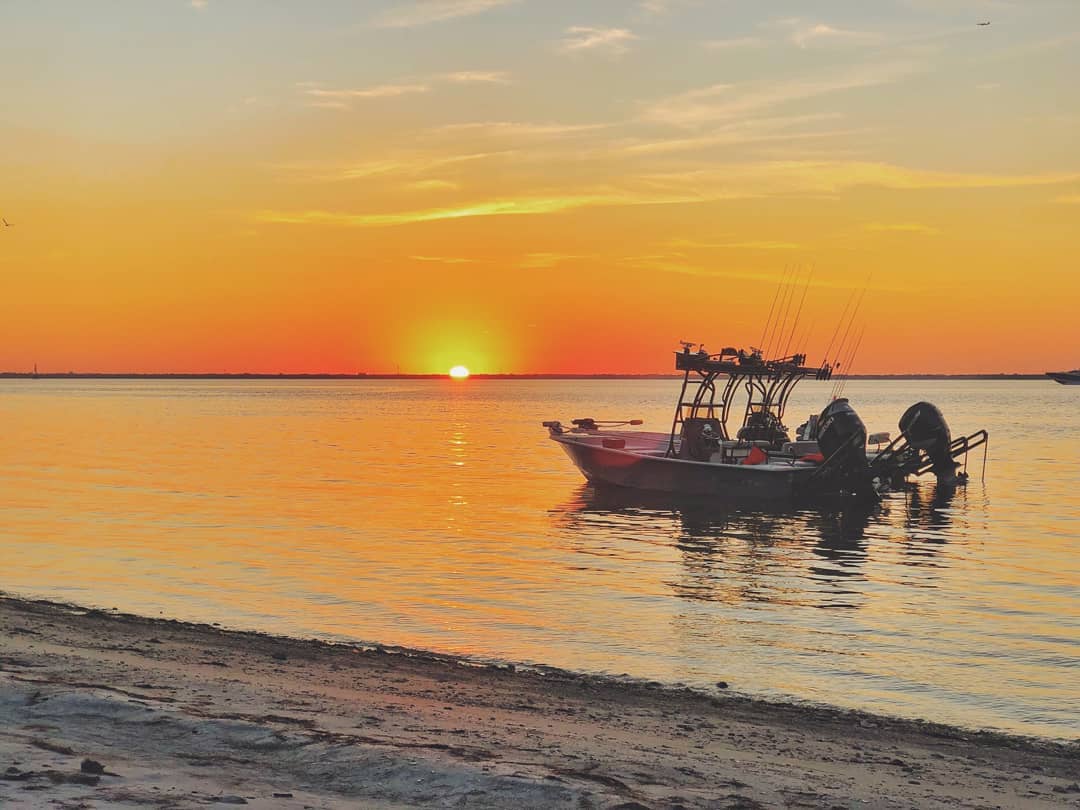
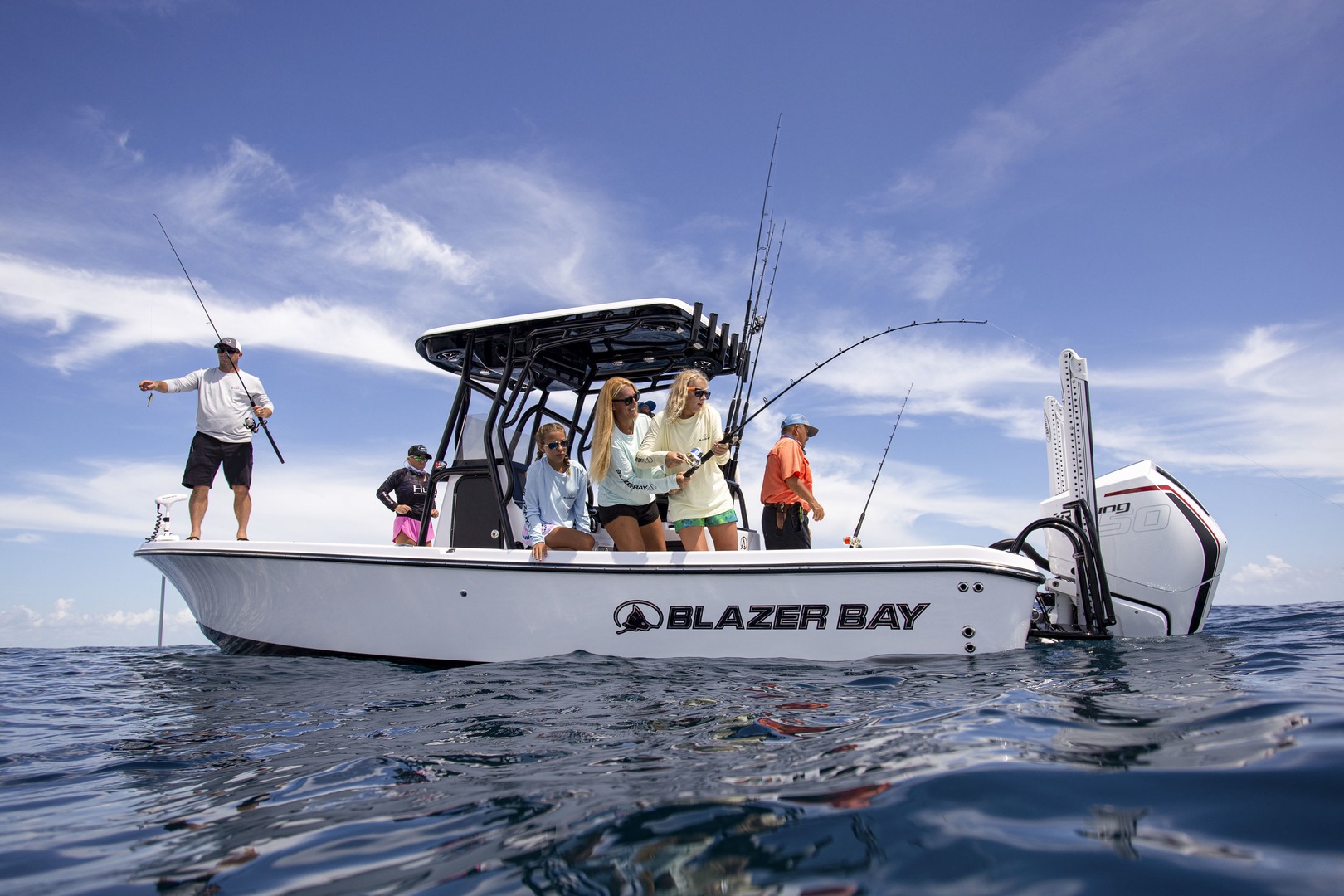
A bay boat is a versatile center console fishing boat designed to handle both shallow water inshore fishing and light offshore runs in coastal areas. With a shallow draft hull design and open deck layout, bay boats give anglers the flexibility to chase redfish in skinny water one day and make nearshore runs the next.
If you’ve ever watched a guide pole across a grass flat at sunrise, only to blast off toward open water to chase speckled trout by mid-morning, you’ve seen a bay boat in its element. This boat type has become the go-to choice for coastal anglers who refuse to be limited by their watercraft.
Bay boats fill the gap between a dedicated flats boat and a larger boat built strictly for offshore work. They’re designed for anglers who fish the estuaries, marshes, and bays of the Gulf Coast and Atlantic seaboard but want the capability to venture into bigger water when conditions allow. Understanding what sets this hull design apart can help you find the right boat for your fishing experience.
Bay Boat Basics: Size and Hull Design
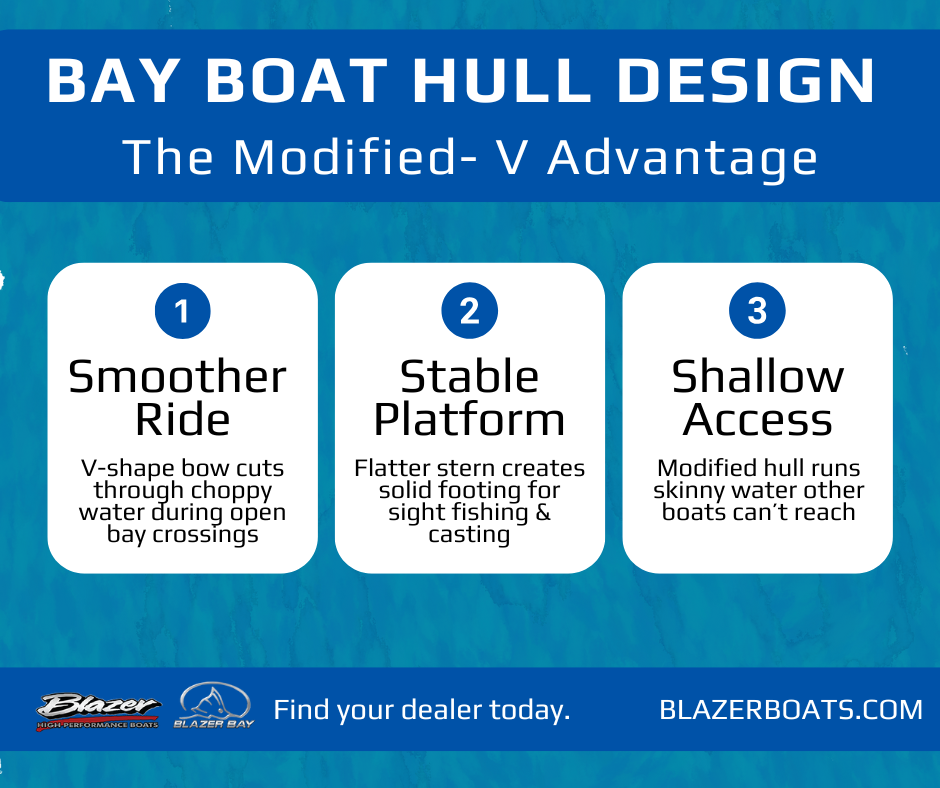
Most bay boats measure between 18 and 28 feet in length. Smaller models around 20 feet work well for solo anglers, while models pushing 26 to 28 feet accommodate multiple anglers with room to spare for clients or family.
Draft is where bay boats truly shine. A quality bay boat can run in water as shallow as 10 to 13 inches when fully loaded. This shallow draft capability means you can access fishing spots that larger boats simply cannot reach.
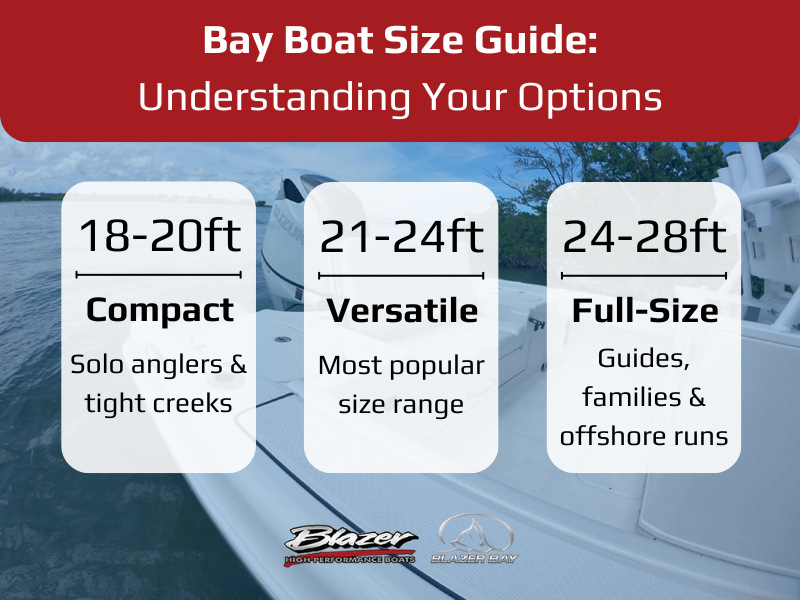
The hull design of a bay boat typically falls between the deep-V hull found on offshore boats and the completely flat bottom of a dedicated flats boat. Most feature a modified-V hull with a deeper hull at the bow that gradually flattens toward the stern. This design:
- Cuts through choppy water and provides a smoother ride during open water crossings
- Creates a stable platform for sight fishing and casting
- Balances rough water capability with shallow draft performance
Center console configurations dominate the bay boat market. This layout keeps the helm positioned midship, leaving the bow and stern clear as casting decks.
Where Bay Boats Excel
Inshore Waters
Bay boats were built for inshore fishing. Think redfish tailing in spartina grass, speckled trout holding on oyster bars, and flounder lurking along sandy drops. The shallow draft lets you get back into areas where larger boats can’t follow, and the raised deck forward provides an elevated vantage point for spotting fish.
The relatively quiet running characteristics matter when working skinny water. You can shut down and use a trolling motor to approach fish without spooking everything in the flat.
Nearshore Runs
While flats boats excel in ankle-deep water, they struggle when seas kick up. Bay boats can handle moderate chop in open water, making nearshore trips to structure, jetties, and artificial reefs practical. Many anglers chase tripletail, cobia, and kingfish within a few miles of shore without needing a dedicated offshore boat.
The deeper hull forward and freeboard height give you confidence in rougher water. You won’t want to challenge 6-foot swells, but 2 to 3 foot seas become manageable in a properly built bay boat.
Versatile Fishing Applications
Bay boats handle live bait fishing with multiple livewells, artificial lure casting from spacious casting decks, sight fishing with forward platforms, and drift fishing over structure. This versatility matters for anglers who fish different patterns throughout the year.
Bay Boats vs. Other Boat Types
Bay Boat vs. Flats Boat
Flats boats prioritize extreme shallow draft above all else, floating in as little as 6 inches of water. However, they sacrifice rough water capability and storage space. Bay boats compromise slightly on draft (typically 10 to 14 inches) but gain meaningful advantages in rougher conditions and more room for gear. If you want the flexibility to run bays, estuaries, and light nearshore waters, the bay boat wins.
Bay Boat vs. Offshore Boat
Offshore boats feature deeper hulls, higher freeboard, and larger fuel capacity for extended runs into the open ocean. However, their draft typically exceeds 18 to 24 inches, limiting access to shallow coastal areas. A bay boat can reach the grass flats that hold redfish, then run to a nearshore wreck the same afternoon.
Bay Boat vs. Center Console
The terms overlap since most bay boats feature a center console layout. However, not all center console boats qualify as bay boats. A center console might have deep-V hull characteristics that sacrifice shallow water access. True bay boats specifically engineer their hull design for shallow draft capability.
Choosing the Right Bay Boat
Think about where you’ll spend 80% of your time on the water. If you regularly fish grass flats and marsh systems but occasionally want to venture nearshore, a bay boat in the 20 to 24 foot range delivers the perfect balance. Anglers who split time evenly between bays and nearshore structure might lean toward larger models that bridge inshore and offshore capabilities.
Coastal areas vary dramatically. The Florida Keys present different challenges than Louisiana marshes or the Chesapeake Bay. Draft requirements, typical sea conditions, and the distance to productive fishing spots all factor into the equation.
A recreational boater fishing protected bays might prioritize comfort features and family-friendly layouts. A tournament angler needs maximum performance, extensive livewell capacity, and stable platforms for sight fishing. A fishing guide demands reliability, client comfort, and the versatility to adapt to changing conditions.
Most bay boats run outboard engines between 150 and 400 horsepower, depending on hull size. Proper power matching affects fuel efficiency, hole shot performance, and top-end speed.
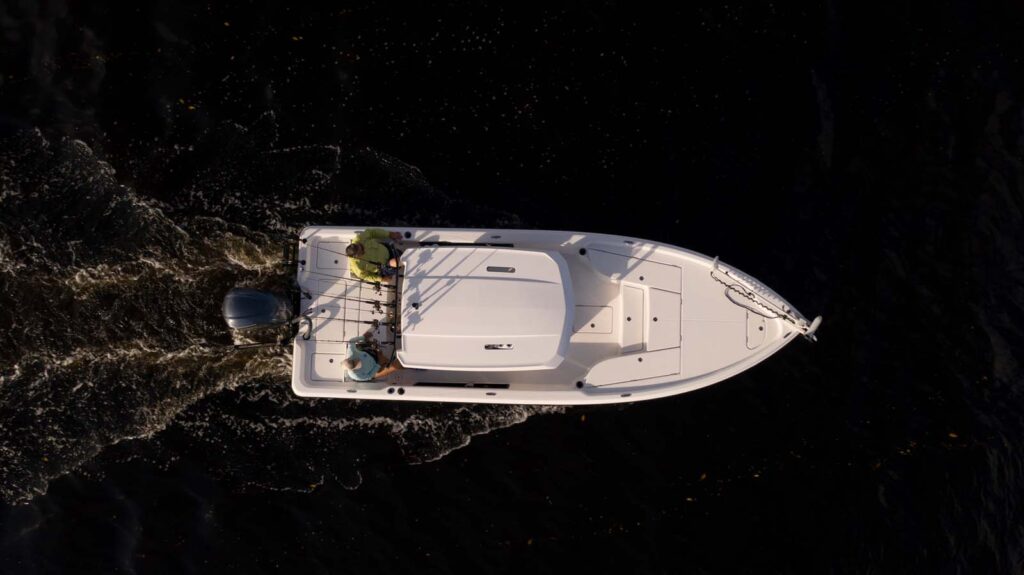
Find Your Perfect Bay Boat at Blazer Boats
When you’re ready to experience what a purpose-built bay boat can do for your fishing, Blazer Boats delivers hand-crafted quality that sets the standard. Blazer Boats has been building high-performance boats in Pensacola, Florida since 1978, focusing on what matters most to anglers: speed, control, and reliability on the water.
From the nimble PureBay 2200 to the offshore-capable 2700 Hybrid Bay, our lineup covers every inshore fishing need. Each model features 100% composite construction, superior livewell systems designed with fish care in mind, and the shallow draft capability that lets you reach water other anglers can’t touch. Find your local Blazer dealer today to see our bay boats in person, or build your own custom Blazer online. Our customer service team and dealer network are ready to help you get on the water in a boat built specifically for serious anglers who demand performance and quality in equal measure.