
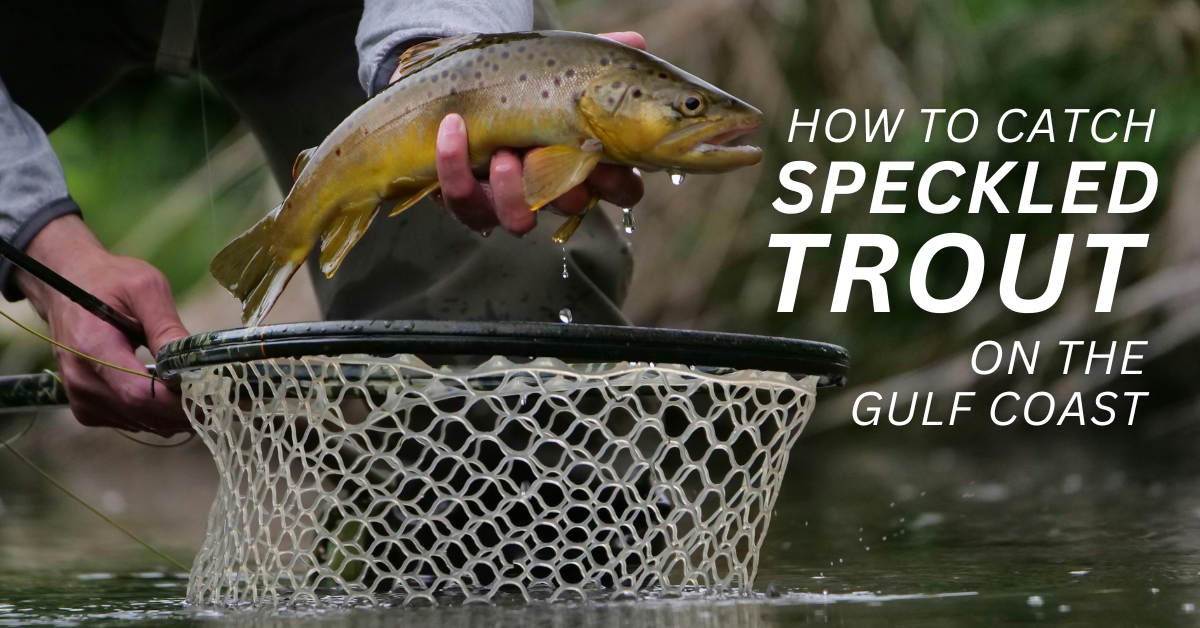
Speckled trout is one of the most popular gamefish to catch along inshore biomes along the Gulf Coast. Also called spotted trout, these fish can be caught from the shallow flats of Texas all the way to the grass beds of Florida. Anglers across the Gulf region are constantly refining their skills, equipment, and strategies in order to catch speckled trout more consistently.
In this article, we will be breaking down the where, when, and how to catch speckled trout, giving you a serious edge over other professional anglers along the Gulf Coast.
Where to Catch Speckled Trout
In order to know where to catch a certain type of game, you first need to understand the behavior of that species. For fishing, that involves understanding their hunting strategies and what food they seek out within the food chain.
Speckled trout are ambush predators that primarily feast on smaller fish species or crustaceans including shrimp, mullet, menhaden, and small baitfish. These species tend to cluster in moving water, such as in incoming or outgoing tides, during low light periods. The movement of their prey is often wind-driven, so making sure you are downwind of high-traffic areas during early morning or late afternoon is sure to yield a higher catch of speckled trout than other areas during other times of day.
These areas can be found up and down the Gulf Coast. However, the specifics of the environment can slightly change from state to state. That’s why it is important to see the best spots on a state-by-state basis, especially for Texas, Louisiana, Mississippi, Alabama, and Florida’s gulf side.
Texas
For Texas, the bays around Galveston, Matagorda, and Laguna Madre tend to be plentiful for speckled trout. They tend to be easy to spot in shallow, clear water, especially in the spring and fall seasons. When fishing around these bays, you are going to want to look for grass flats or oyster reefs where these fish and their food tend to cluster, especially when close to the shoreline where wind determines the swim patterns of prey animals.
Louisiana
Louisiana is famous for its marshes and these environments can be rich with spotted trout. Targeting tidal passes with moving water can be a great place to catch this species of fish. Due to water’s moving patterns in these marshes, going to points and cuts in water systems can be great for catching prey around the natural curve of the water’s flow.
Mississippi
Mississippi’s coast is close to several bay mouths that branch off from the southernmost end of the Mississippi river, which makes for great grounds for catching speckled trout. There are plentiful barrier islands located near bay mouths that can provide great grounds for catching these fish. Their proximity to grass flats and sandy bottoms also makes it favorable conditions for catching spotted trout.
Alabama
Mobile is one of the largest cities in Alabama and is famous for its large, shallow bay with nearby estuaries for marine life to call home. Sticking near these shallow flats during low light can be a great place for catching speckled trout, especially near grass lines. Make sure to watch for tides and currents, as these areas of moving water tend to naturally draw both speckled trout and the prey they hunt.
Florida
Florida’s gulf coast can be a great place to catch speckled trout, especially along the Emerald Coast stretching from Florida’s panhandle to Tampa Bay. These areas are plentiful with seagrass beds, shallow bays, and even mangrove forests. If you are fishing near mangrove forests, make sure to target areas with moving water as the roots of these trees tend to slow or still the waters around them.
When is the Best Time to Catch Speckled Trout
As touched on in the previous section, fishing for speckled trout during the early morning or late afternoon allows for the low light conditions necessary to prevent scaring off fish. However, there are also season-specific tips when it comes to timing your fishing trip.
In the spring, the trout tend to move shallow and feed aggressively, making this a prime time for sight-fishing. As the spring turns to summer, the amount of hours with bright light increases, pushing these fish into deeper waters and being most active earlier in the day. Fishing in the early mornings near deeper structures tend to help during summertime fishing trips.
Then there are the fall and winter seasons, each of which come with their own adjustments. Autumn can be one of the best seasons to learn how to catch speckled trout as this is when the fish gather in schools and feed heavily before winter causes their prey to dwindle. Once it enters the winter season, it’s best to fish during warm afternoons in deep waters where fish can maintain their internal temperatures more easily along the bottoms of rivers and bays.
How to Catch Speckled Trout
Now that we know where and when these fish are clustering, we need to look at the equipment needed to catch them. Both live bait and artificial lures can work for catching speckled trout, but it matters what you specifically use.
For live bait, shrimp tends to be effective across the whole length of the Gulf from Texas to Florida. However, certain areas with more brackish water could benefit from using finger mullet, as they are native to both freshwater and saltwater and tend to be popular prey for speckled trout.
As for artificial lures, there are three main types that tend to be effective: soft plastic paddle tails, shrimp imitations, and topwater plugs. Soft plastic paddle tails and shrimp imitations best match the look of speckled trout’s most common prey. As for topwater plugs, they are best to use during the warm months in low light as to make their placement less obvious. These artificial lures allow anglers to adapt to changing conditions very quickly, which can make a huge difference when fishing for species that tend to cluster in moving water.
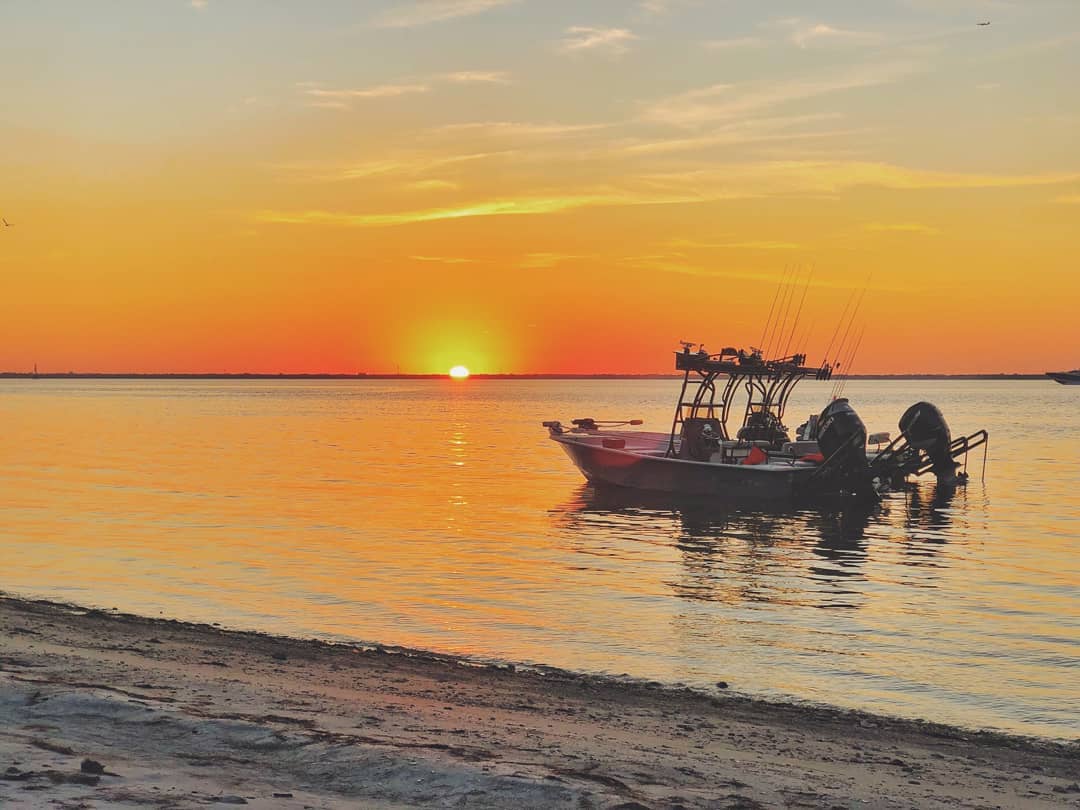
As the conditions in moving water tend to change quickly, it is important to maintain boat control in these areas. Speckled trout spook easily, especially in shallow waters. It is best to make sure you have a boat that can check everything off your list:
- Shallow draft for flats and marshes
- Wide beam stability for casting and drifting
- Stable casting platform that stays steady even in windy conditions
- Sharp hull design that increases fuel efficiency, letting you fish all day long
Blazer Boats offers several great models that check every box on this list. For a smaller, sharper model that puts the “pro” in “pro angler”, the 675 Ultimate Bay offers a large casting platform and plentiful storage. For a model with more of a focus on providing a comfortable ride all day, the 2440 and 2700 Hybrid can both be great choices. Lastly, if you are looking for something that straddles the line between plentiful amenities and pro angler needs, the 2550 GTS provides the large casting deck and storage of the 675 Ultimate Bay while having more seating options akin to the larger, family-centric models.