
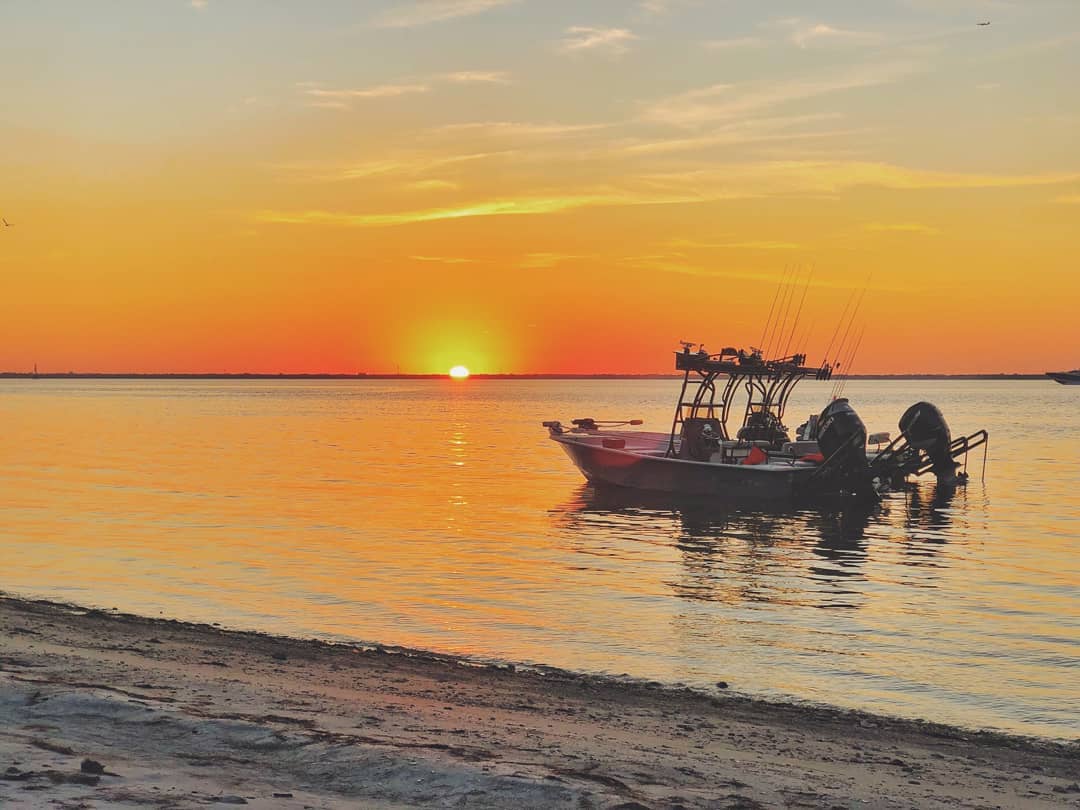
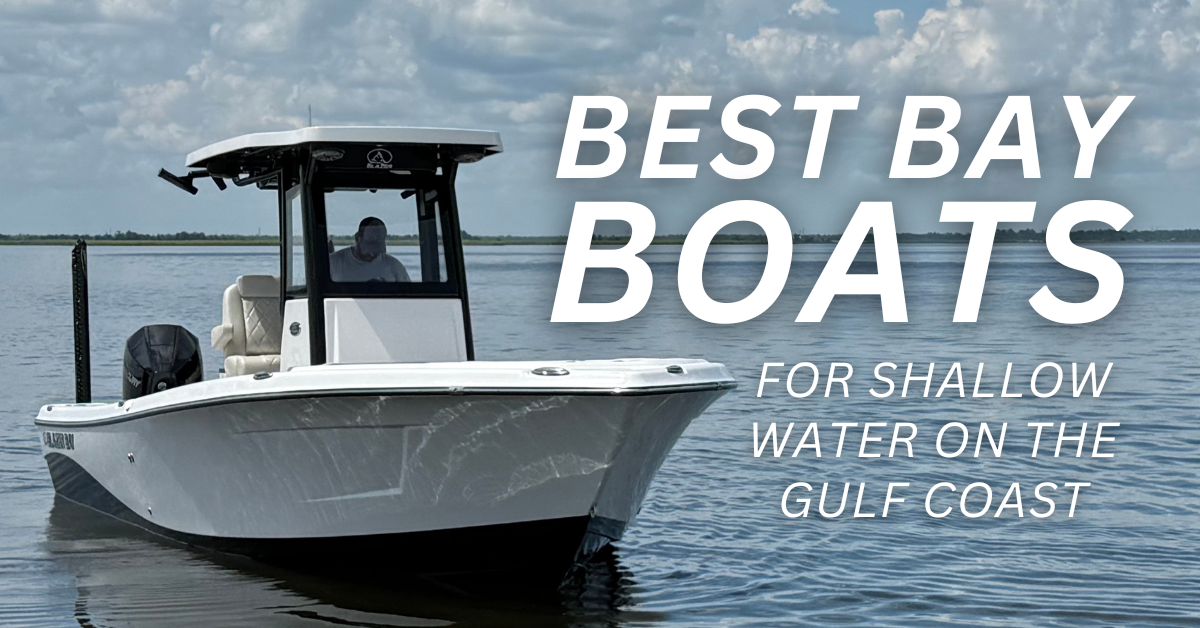
The Gulf Coast is one of the most bountiful fishing grounds in the United States. With its access to a wide range of environments with both a high quantity and quality of marine life, it’s no wonder that many anglers call the Coast their home away from home. For those lucky enough to live within driving distance, having a bay fishing boat can turn these prime fishing grounds into your territory. However, you need more than just a boat: you need the best boat.
Before we can identify the best boat for your needs, we first need to understand the shallow water conditions you’ll find when boating along the Gulf Coast. From there, we can identify a boat that has a list of qualities that are beneficial in that environment. Finally, we can whittle that list of features down to what is most important for you and your fishing style, giving a list of center console bay boats that offer a high level of performance in shallow waters.
Gulf Coast Shallow Water Conditions
To start, we need to take a look at the Gulf Coast and its shallow water conditions. The Gulf Coast spans across five States and includes several different biomes including marshland, grass flats, and estuaries. These biomes can have unique characteristics depending on which State they are bordering, so it’s best to look at shallow water conditions state-by-state.
Texas
Starting furthest west, Texas has over 360 miles of Gulf coastline and is well known for its several large bays. Some of the most famous bays in Texas include Laguna Madre between the mainland and South Padre Barrier Island, Matagorda Bay halfway between Corpus Christi and Houston, and Galveston Bay just outside of Houston.
These bays are well-known for their expansive shallow flats. Because these flats are often protected by barrier islands, the water tends to be relatively calm, allowing shallow water boats to run long distances efficiently. Additionally, these flat, shallow waters are ideal for sight-fishing redfish and other fish species that tend to cluster in grass flats.
Louisiana
Next to Texas is Louisiana which is famous for its marsh system. Marshes are shallow waters broken up by non-woody herbaceous plants like reeds, sedges, and grasses. Along the coast you can find tidal salt marshes, which are impacted not just by the constantly evolving nature of marshes, but also by the rise and fall of coastal tides.
These lands tend to have soft bottoms that host oyster beds, which are great for feeding schools of fish but awful for your boat motor. Making sure you have a boat that is stable when drifting or anchoring will be instrumental in navigating these lands. Additionally, a boat that is good at making narrow cuts will be more adept at traversing these waters.
Mississippi
Mississippi has some of the same marshes as Louisiana, but is better known for its open water runs between shallow bays. These waters tend to not be protected by barrier islands or marshes like Texas or Louisiana. It is important to choose a boat that can handle choppy water and windy conditions. Additionally, a boat with a shallow draft will better be able to navigate the extremely shallow waters.
Alabama
Alabama’s coastline is very similar to Mississippi with one notable exception: Mobile Bay. Right next to the coastal city of Mobile, there is a large bay that is home to some of the most biodiverse estuaries on the Gulf Coast. These shallow waters connect upland to flooded cypress swamps, tidal marshes, and even bottomland hardwoods. This land is also overflowing with oyster reefs, which is great for biodiversity, but dangerous in boats that have a deep draft.
For these conditions, a boat that can handle both rough and shallow water is ideal. Weather changes can be drastic the closer to the middle of the Gulf Coast you go due to the sweeping winds that come into the Gulf from the Atlantic Ocean. Having a boat that can handle volatile weather, shallow water, and potentially rough conditions will lead to a much more bountiful fishing trip.
Florida
Florida has two coasts: the Gulf Coast and the Atlantic Coast. As this article is focused on the Gulf Coast, we are going to focus on those environmental conditions, especially when it comes to biomes and weather.
Florida’s Gulf Coast can be split into three sections: the Panhandle, Tampa Bay, and the southern swamps. Along the Panhandle there are several estuaries tucked away along Pensacola Bay, Perdido Bay, and the Apalachicola Bay. These areas have rich seagrass beds, marshlands, and oyster reefs that provide essential nurseries for many species of fish that are hunted both commercially and recreationally.
As you get close to where the State begins to bend southward, there is the famous Tampa Bay that is dominated by seagrass beds, salt marshes, and mangrove forests. While seagrass beds and salt marshes tend to be large, flat expanses that are more subject to windy conditions and choppy waters, mangrove forests can be difficult to navigate due to their large tree roots growing at awkward angles for boats to navigate around. A boat with a shallow draft and stable fishing platform would perform well in salt marshes, while mangrove forests are best for more narrow boats with tight steering controls.
Lastly, there are the southern swamps of the Florida Gulf Coast. Here, mangrove forests turn into swamps that are swarming with juvenile fish and lots of sea grasses to hide in. There are also seagrass meadows similar to the marshes and grass flats discussed in other sections above.
One biome that is unique here are the coral reefs. Near the southern tip of Florida, patch reefs pop up in small clusters wherever the environment supports them. These reefs are plentiful for catching more exotic fish and tend to be great feeding grounds for larger game. However, they can also be dangerous to traverse due to the corals growing close to the surface where they can scrape along the hull or get caught in boat motors.
As can be seen, every State has unique biomes that require the presence of different boat properties. Now, we can take that list of qualities and break them down into the best qualities to look for in a center console bay boat.
Qualities of a Great Shallow Water Bay Boat
Whether you are navigating dense mangrove forests or large open-air grasslands, you need a bay boat that has qualities that align with the environment you want to target. While a lot of fishing biomes have unique species of flora and fauna, they often share a lot of common characteristics that can usually be split into two categories: open air and closed space.
Open air biomes are environments that are open, accessible, and oftentimes flat. These lands are usually easy to traverse, but may require traveling long distances between fishing hotspots. Additionally, these open areas of water tend to be windier, leading to choppy waters. For these biomes, boats with the following characteristics are best:
- Wide beam for stability when poling or casting
- Smooth ride in open, choppy waters
- A fast and efficient engine for traveling long distances
- T-tower or similar structure for all-day sun protection
- A second station for sight fishing from a raised vantage point
Closed space biomes tend to be closed off either by local geology like barrier islands or ecology like trees. These areas tend to be calmer water thanks to the natural protections that make them closed off. However, they also tend to be harder to traverse due to tree roots, rocks, or other barriers. In these biomes, it is best to have a boat with the following qualities:
- Ability to navigate tight spaces
- Shallow draft to navigate over roots, oyster beds, and reefs
- Short center console as to prevent getting caught in mangrove canopies
Most biomes do not fit neatly into one of these categories. Oftentimes, biomes will fall somewhere on the spectrum between open air and closed space. That is why there is a general list of characteristics that are smart to keep in mind when looking for a shallow water boat no matter the more specific conditions:
- Shallow draft hull design
- Lightweight construction for quicker hole-shot
- Ample deck space for casting and gear storage
- Efficient performance in both calm flats and choppy bays
- Comfort amenities for all-day fishing trips, such as center console restroom with head
- Plentiful storage for rods, reels, bait, and other equipment
- Comfortable seating to accommodate everyone on your fishing trip
Now that we have broken down the qualities to look for, it is important to review these lists and determine which characteristics best align with your fishing strategy. Then, we can choose a bay boat that checks those boxes.
Choosing a Bay Boat That Fits Your Needs
There are several different styles of center console bay boats, each with attributes that are ideal for different fishing conditions. Here, we have broken down several models and the features that make them ideal options for your bay fishing needs.
To make it easier to navigate, we have split the boats into a few different key categories based on what characteristic is most important to you: comfortability, performance, versatility, or price.
Comfortability
When you’re out on the water all day, you want a boat that will provide a comfortable ride from sunrise to sunset. That is where things like front lounge design, personal storage, and other comfort amenities jump to the top of the checklist. There are several different bay boat models that check these boxes, but each one offers their own unique approach to solving these problems.
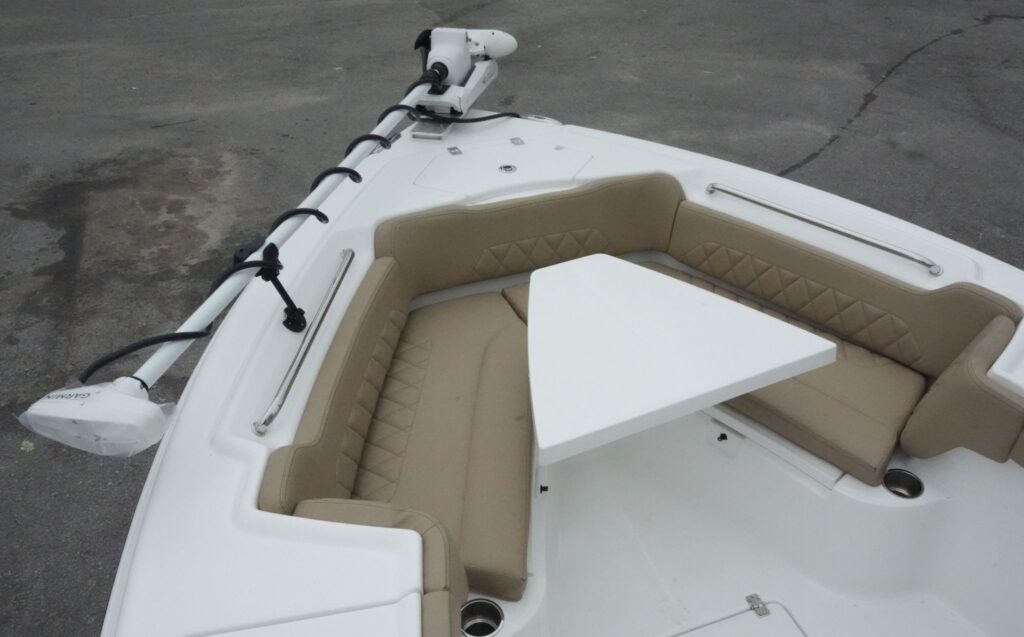
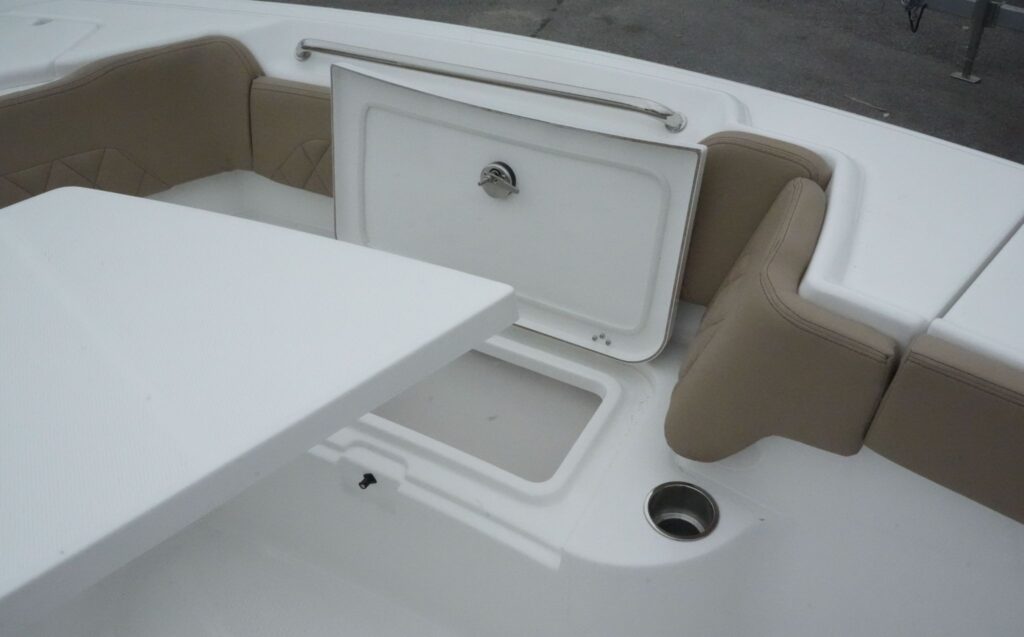
Take the Makaira 2800, which uses its full 27-foot 2-inch length to make sure to accommodate up to 11 people comfortably. Those 11 people will have different needs throughout the day, and the front lounge is designed to change with those needs. It can go from a fully padded lounge to a roundtable-style bench with a table for an on-the-water picnic and even doubles as storage! There is also a cooler seat with backrest that can be upgraded to a coffin box and, in the aft deck, a folding bench for additional seating. That’s not to mention the double bolster seat and livewell combo acting as the captain’s chair with space for your first mate at your right hand side.
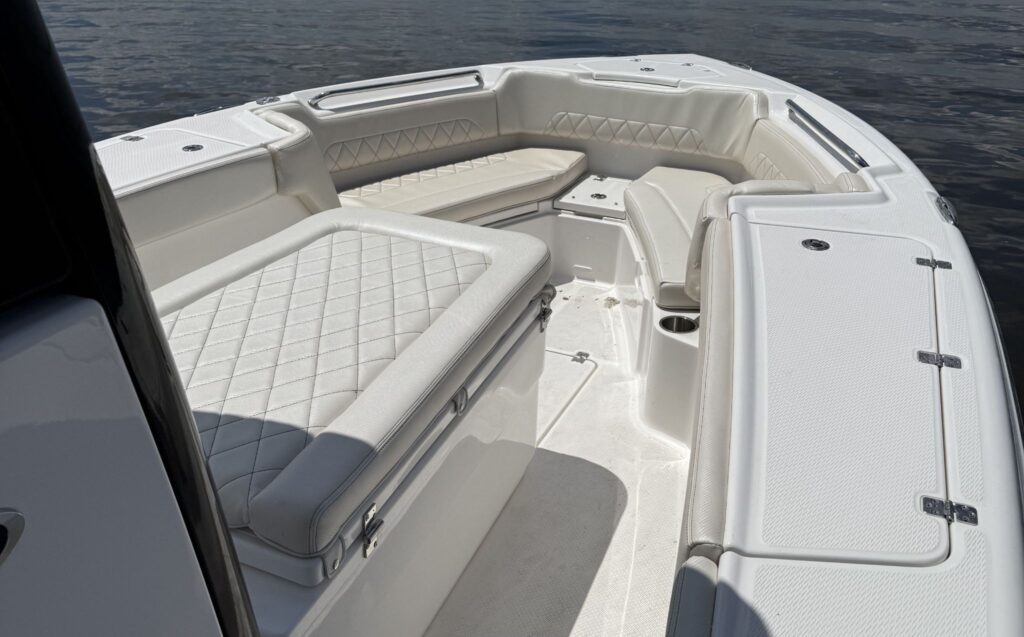
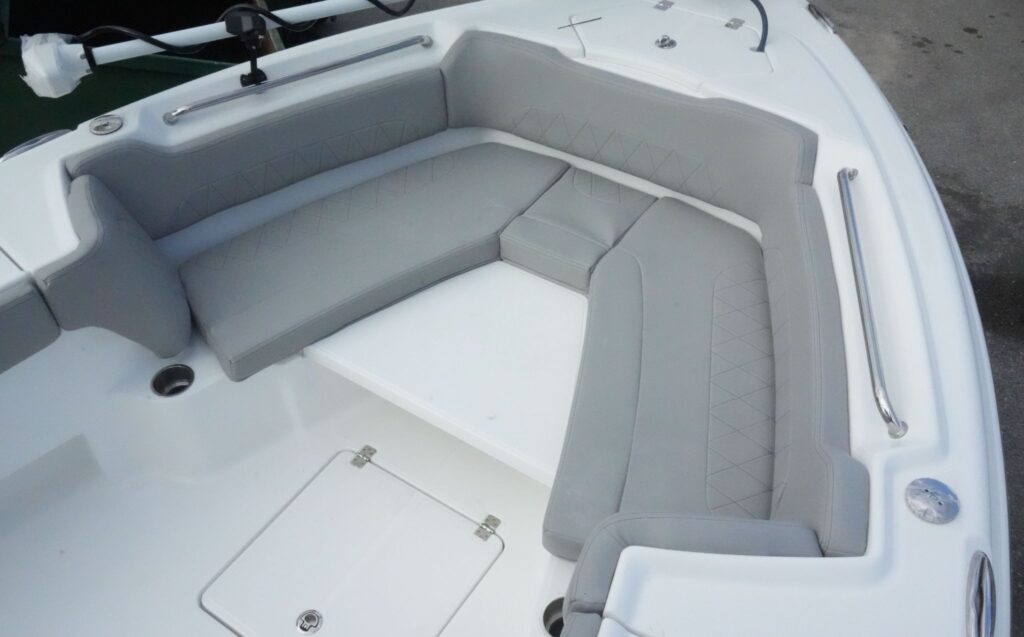
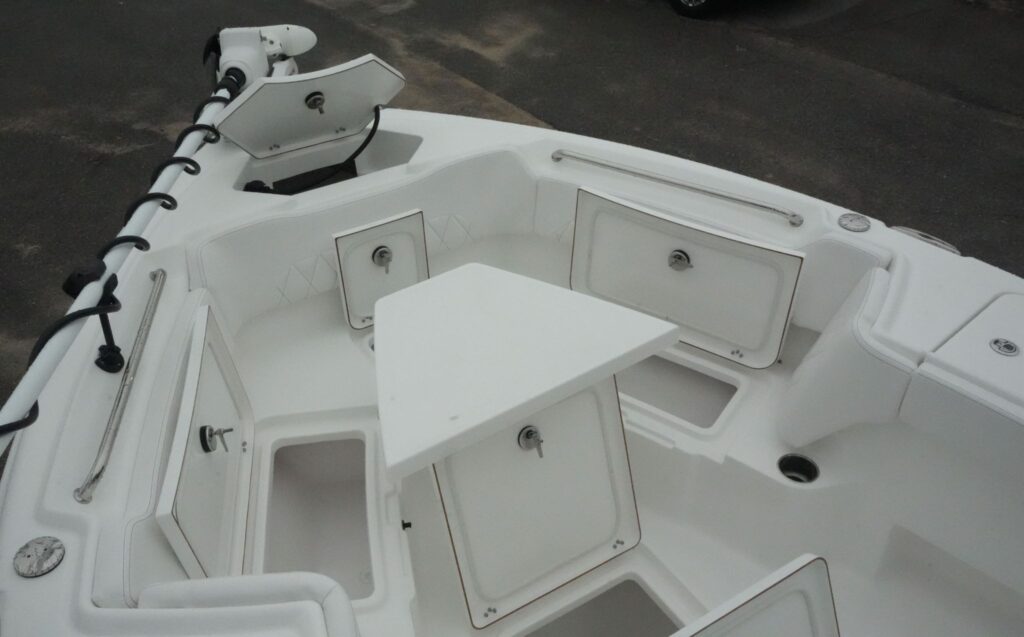
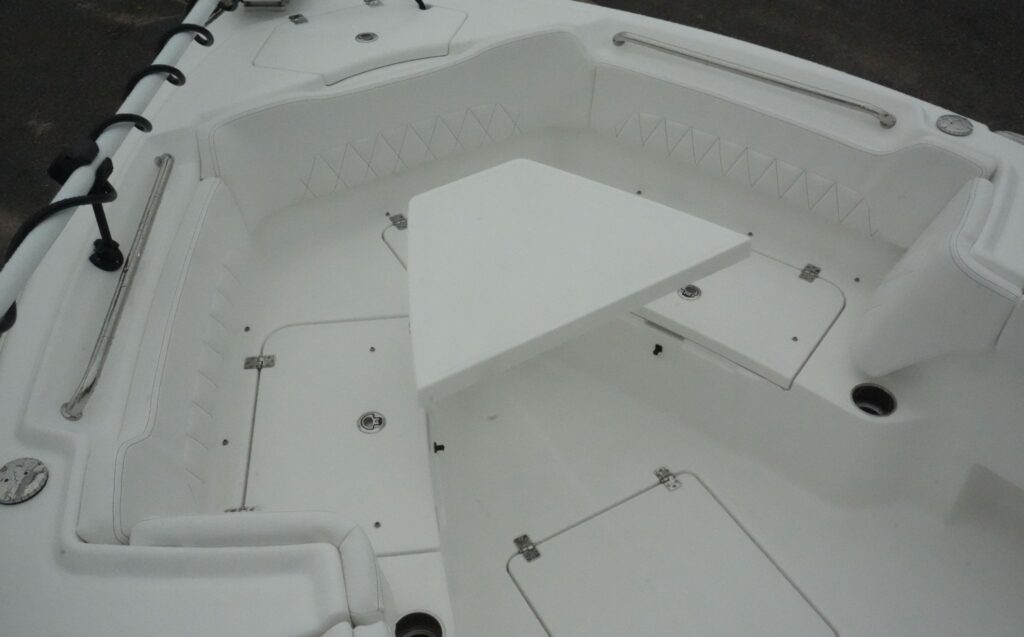
The Makaira’s little sister, the Makaira 2600, features a very similar layout to the 2800. The front lounge can convert from a large padded lounging area into a bench with a table or just seating just like the 2800. This lounge design also features storage, the double-bolster seating at the helm, and a folding aft bench. The main difference when it comes to comfortability is that the 2600 is slightly smaller, meaning that the lounge space is also a little tighter and does not feature the baitwell storage under the front lounge seating that the 2800 has.
Then there is a third option with a different front lounge layout: the 2440. This model’s front lounge is done in a squared-off U-shape that replaces the removable table with additional cushions that allow for forward-facing lounging. Like the Makairas, the 2440 also features under seat storage including a rod locker, a multipurpose compartment, and an insulated cooler with adjacent in-floor storage. Unlike the Makairas, the front lounge here only takes up half of the front portion of the boat, allowing for enough space for a raised front deck with two insulated fish boxes and an anchor box.
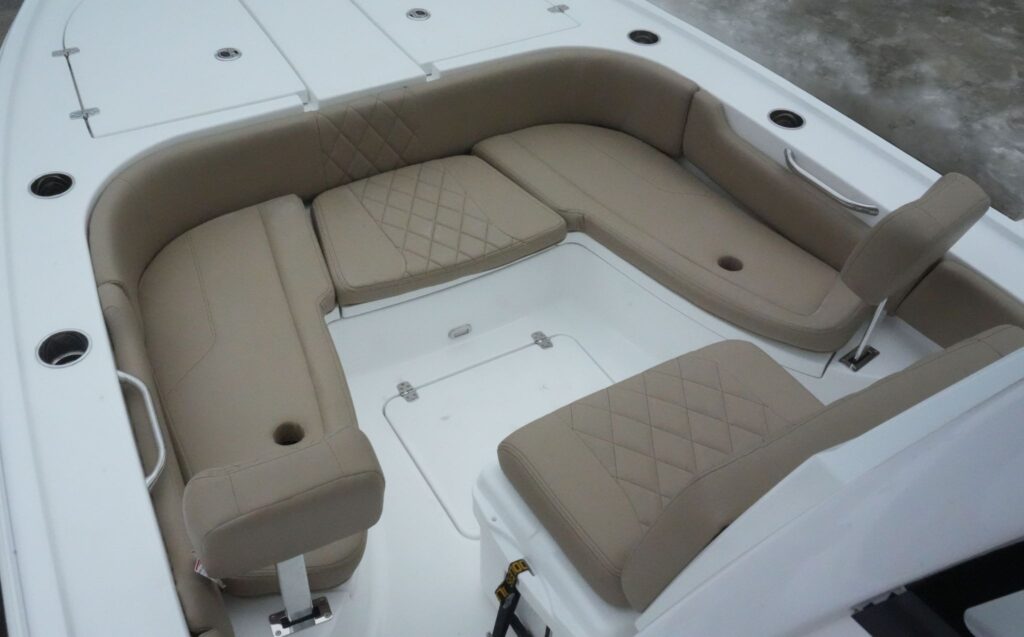
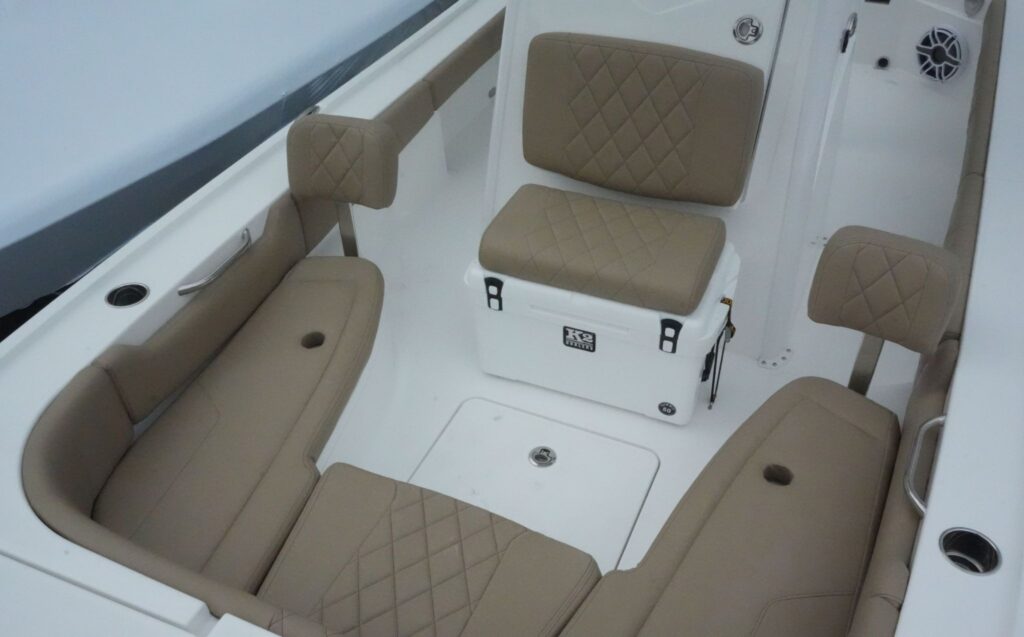
These three models are ideal for those looking for boats that offer all-day comfortable cruising whether you’re bringing the whole family out for the day or getting together with your buddies for that fishing trip you keep talking about.
Performance
One of the most important details to look for when choosing a bay boat is performance. Hardcore anglers need to focus on the details that will help them stay at the top of their game. When it comes to bay boats, that means plentiful storage, top-of-the-line electronics, and a large stable fishing platform.
One model that is ideal for high-performance bay anglers is the Blazer Bay 2550 GTS. Not only is the front deck supported by an 8-foot 6-inch beam, but it also has several storage containers including two rod lockers, several multipurpose compartments, and under gunnel rod storage. Along the stern of the boat, there are two livewells built into the aft deck for containing your catch. This model also has a sports package featuring a sharper console design and unique seat shape and an additional multipurpose storage container built into the aft deck.
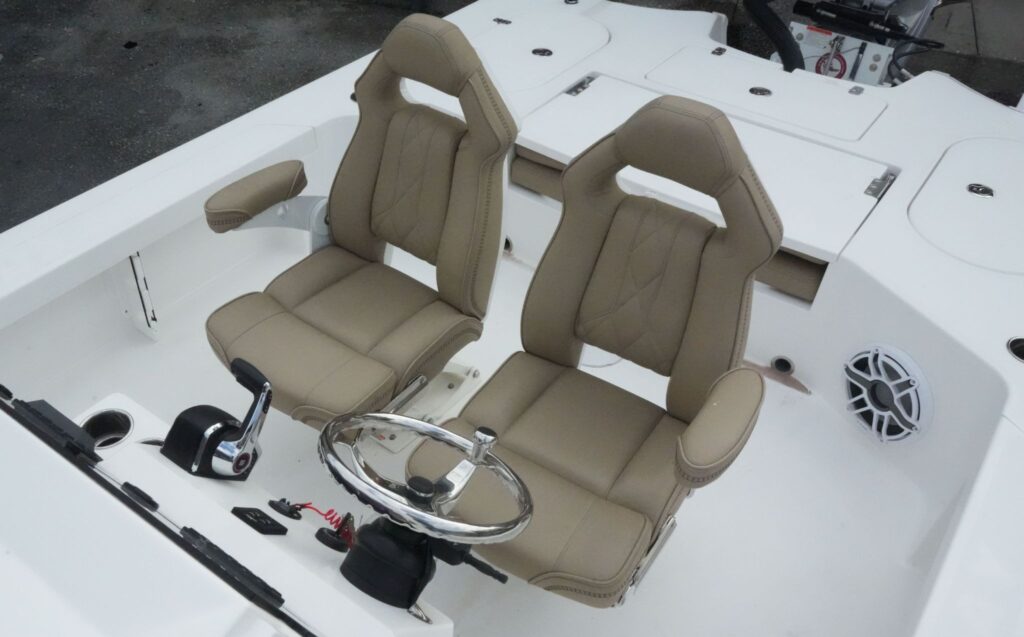
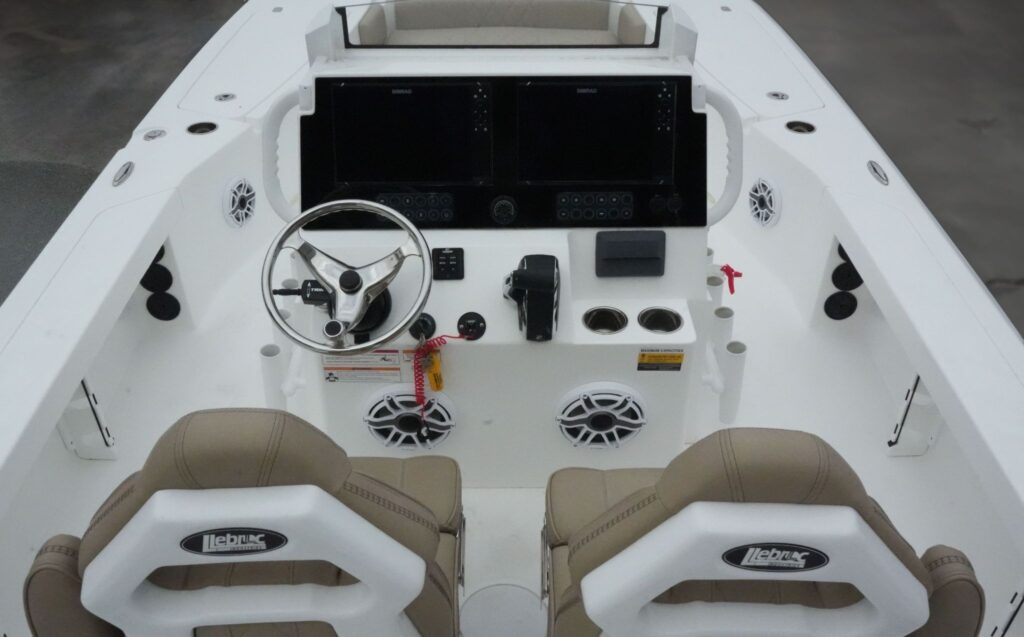
The second high-performance model to highlight is the 675 Ultimate Bay which puts much deck space first. The front deck features two large multipurpose storage compartments, an anchor box, two rod lockers, and even an in-floor compartment. The center console is simple and sleek in its design, pairing well with the Baja custom bucket seats for a comfortable all-day ride. Behind the center console, there are two livewells built into the aft deck as well as the all-important battery compartment. This design is focused on efficiency, deck space, and performance, and it shows.
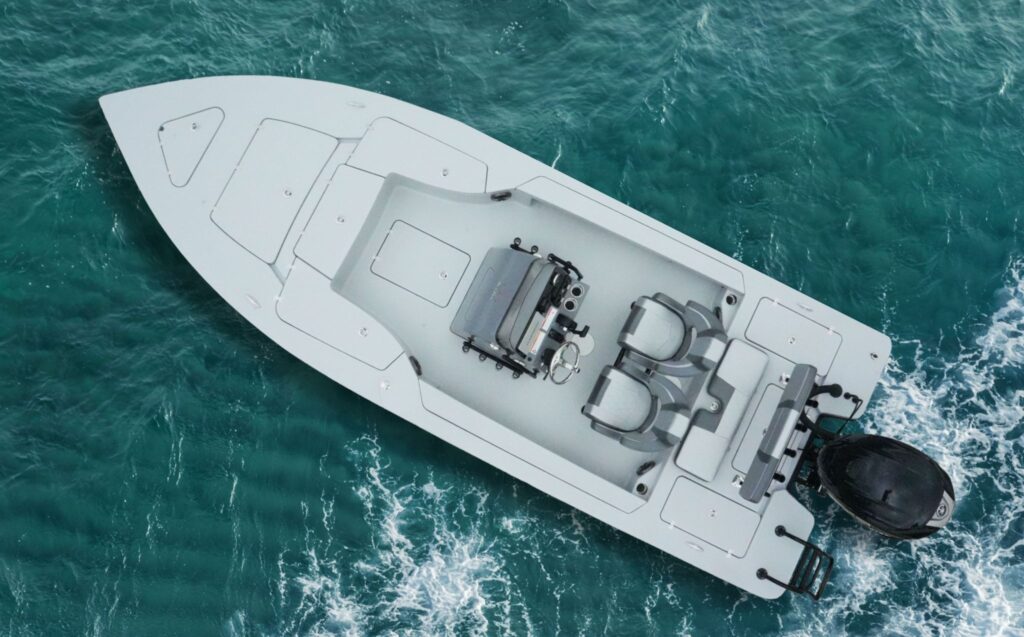
However, there is a third option that offers peak performance while still providing enough space for the whole family. The 2700 Hybrid’s front lounge is a simple bench with a built-in cooler, with the front lounge space being replaced by plentiful front deck storage including a macerated fish box, rod locker, multiple multipurpose compartments, and an anchor box at the nose of the boat. This model has the double-bolster seating at the helm and aft folding bench seen on the Makaira 2800 and 2600, but the 2700 Hybrid does have the option for additional seating at a second station built into the top of the T-Tower.
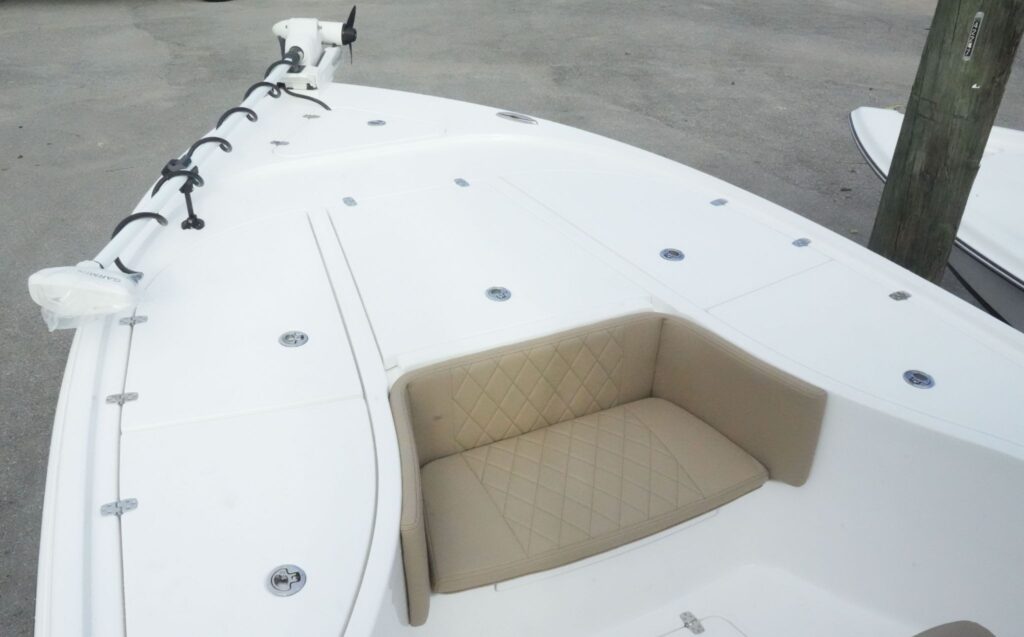
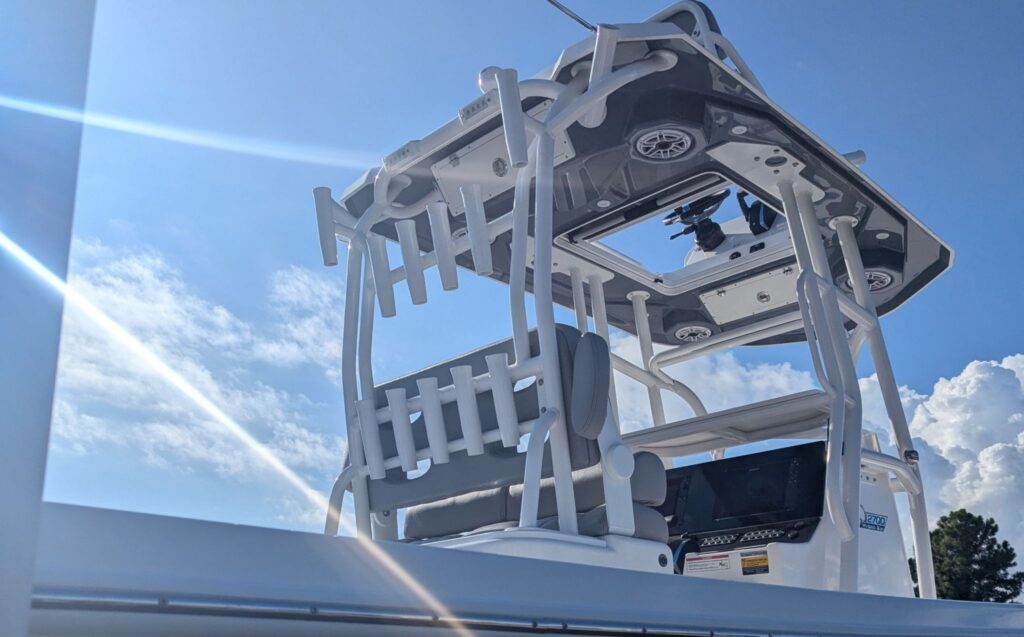
Whether you are looking for a pure fishing machine like the 675 Ultimate Bay, a family-friendly competition-ready boat like the 2700 Hybrid, or something in between like the 2550 GTS, these models are designed to put performance first. For anglers looking for a high-performance partner out on the shallows, these models are some of the best you can find on the market.
Versatility
For those that catch a wide range of game, they need a boat that can adjust to their needs. These models need to prioritize a shallow draft and versatile deck layout. These two models offer some of the most versatile center console bay boat designs.
The first is the 2400 which has several layout options. One option is the Cajun Step front deck, which features angled steps connecting the raised fishing platform with the central deck space. The rear storage and battery compartment feature a similar angle to the Cajun Steps, allowing for plenty of space for walking around and fishing.
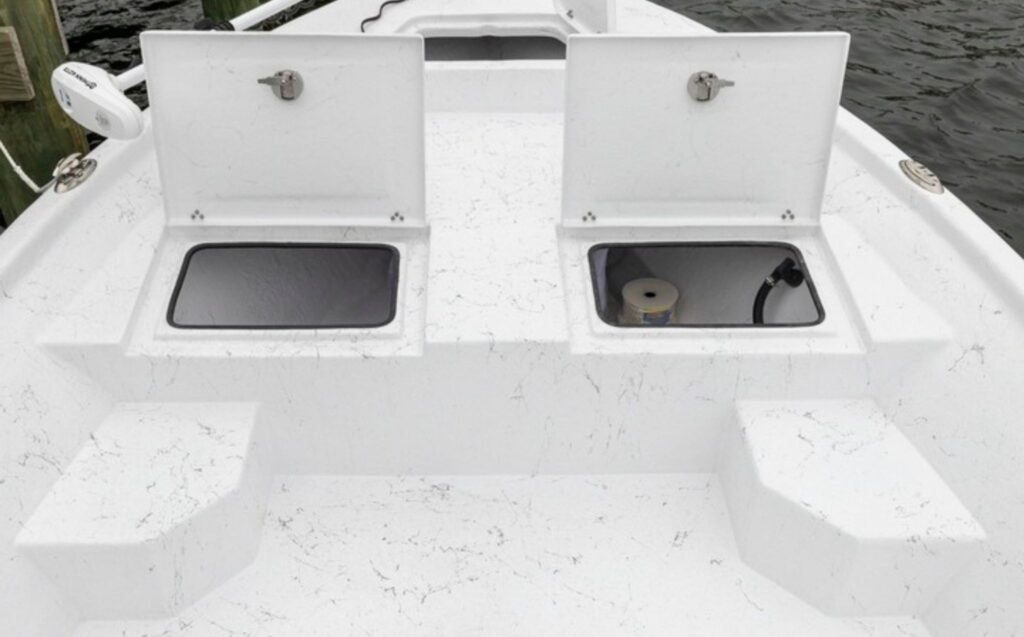
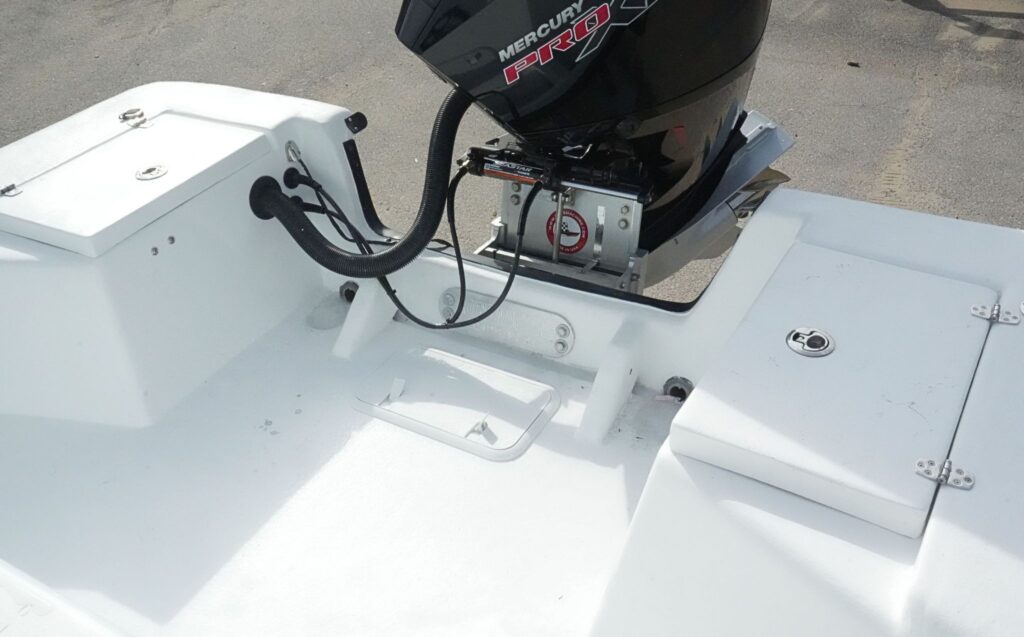
Secondly, there is the rod box front deck layout which features a front deck layout similar to the 675 Ultimate Bay with an aft deck bench that doubles as a livewell when the seat is raised. This layout is less bare-bones than the Cajun Step option, including more comfort features and built-in storage compartments.
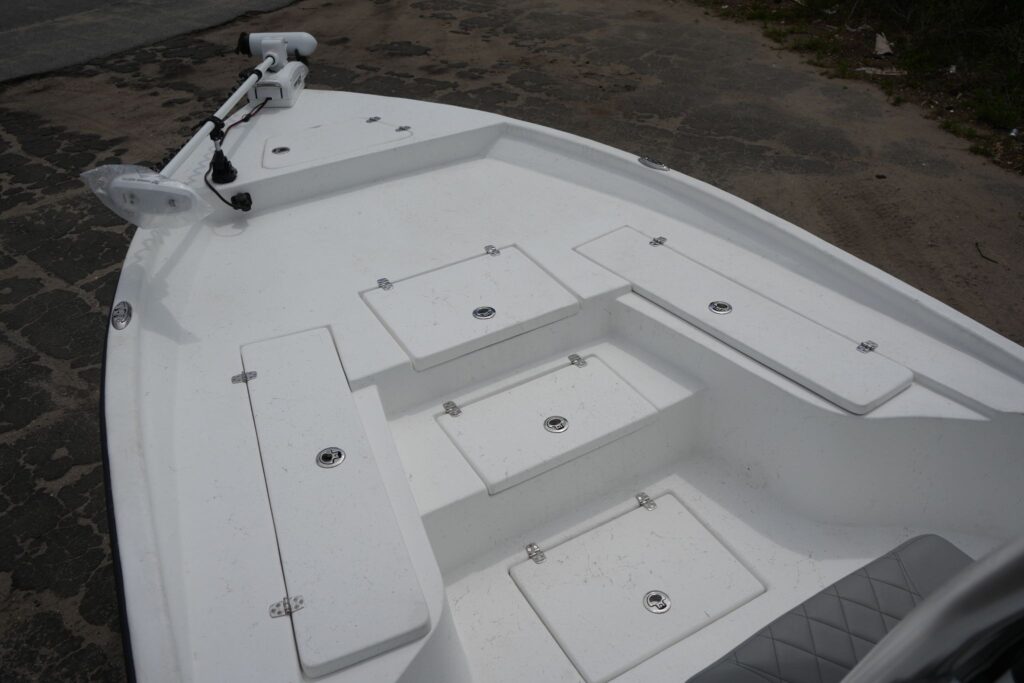
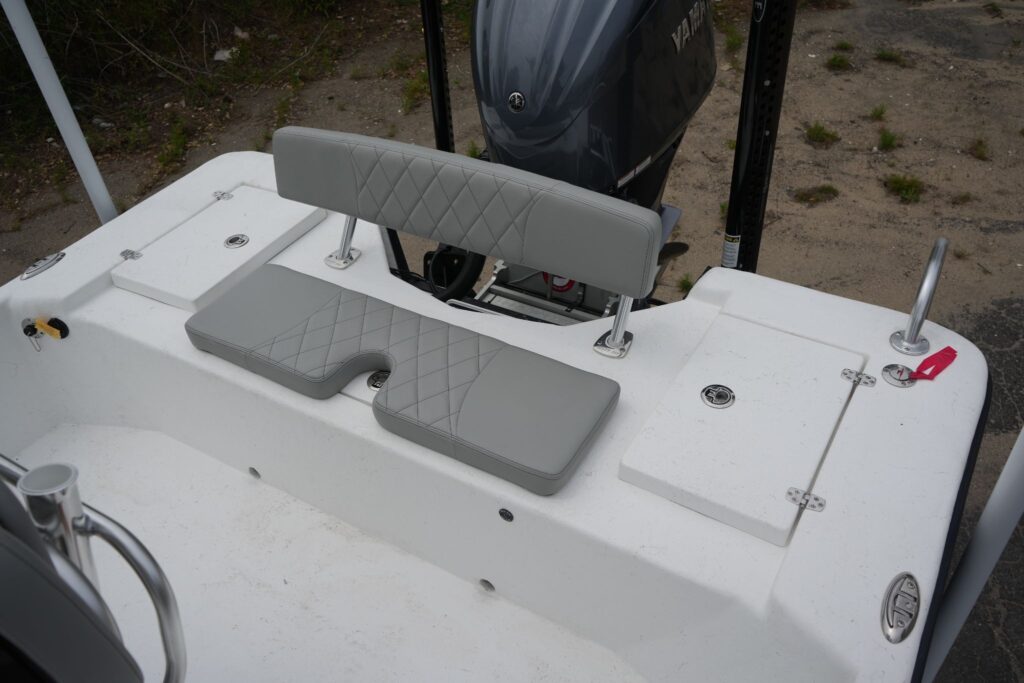
The third layout option – the Front Deck with Insulated Fish Box – is exactly what it says on the tin. This front deck layout includes insulated fish boxes that are instrumental for those who catch a wide variety or quantity of fish and need space to keep their catch sorted.
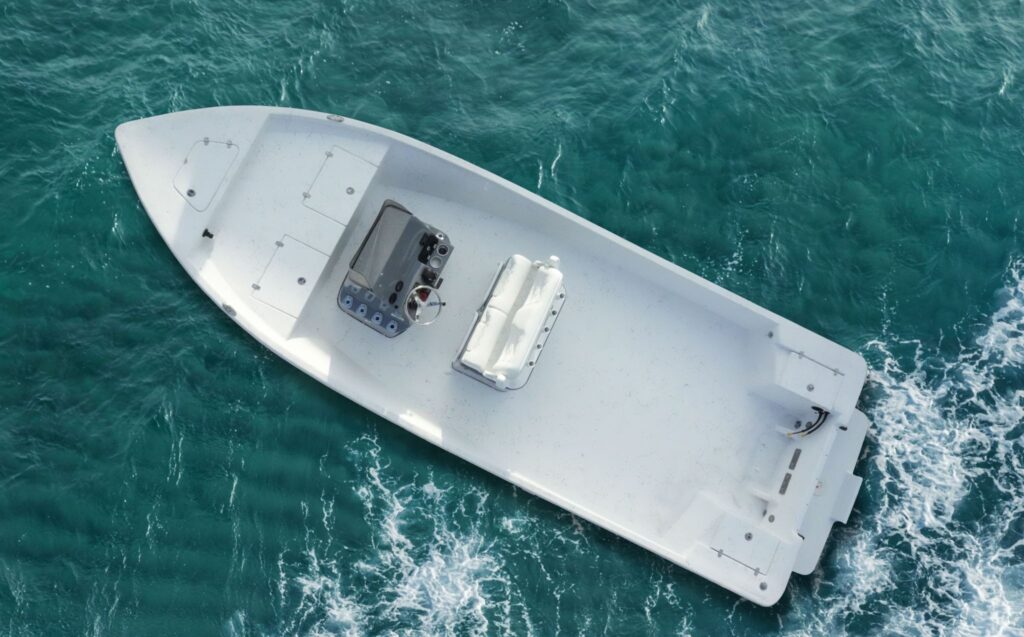
However, this is not the only boat design that puts versatility first. The 2400 Open Bay Striper wears versatility as a badge of honor, with a very open air design that is capable of a wide range of fishing strategies including shrimping and crabbing. The front deck of the boat includes two multipurpose storage compartments and a rod box near the nose of the boat. The aft deck includes a battery box and additional multipurpose storage compartment, with a livewell built into the double-bolster seat near the center console. This open design means the boat can be whatever you need it to be.
Price
We can dream about boats all day, but at the end of the day, one of the most important things is financial responsibility. However, just because you’re a savvy shopper doesn’t mean you can’t still enjoy premium features. The Purebay series is designed to provide the ultimate value with premium features at a bargain price.
The Purebay 2400 is the larger model with an overall length of 24 feet and 5 inches. This boat’s front deck design includes three multipurpose storage compartments, two rod lockers, and an anchor box at the nose of the boat. There is also the option for a fold down fishing chair that can be easily installed and removed from a post in the front deck.
In the center console, there is a built-in livewell seat with a backrest that allows for access not just to an additional storage compartment, but to the electrical work for the center console. Paired with the console is a double bolster lean post with under gunnel storage to either side of the post. Lastly, the aft deck includes a livewell, two folding seats, battery compartment, additional storage, and access to the bilge.
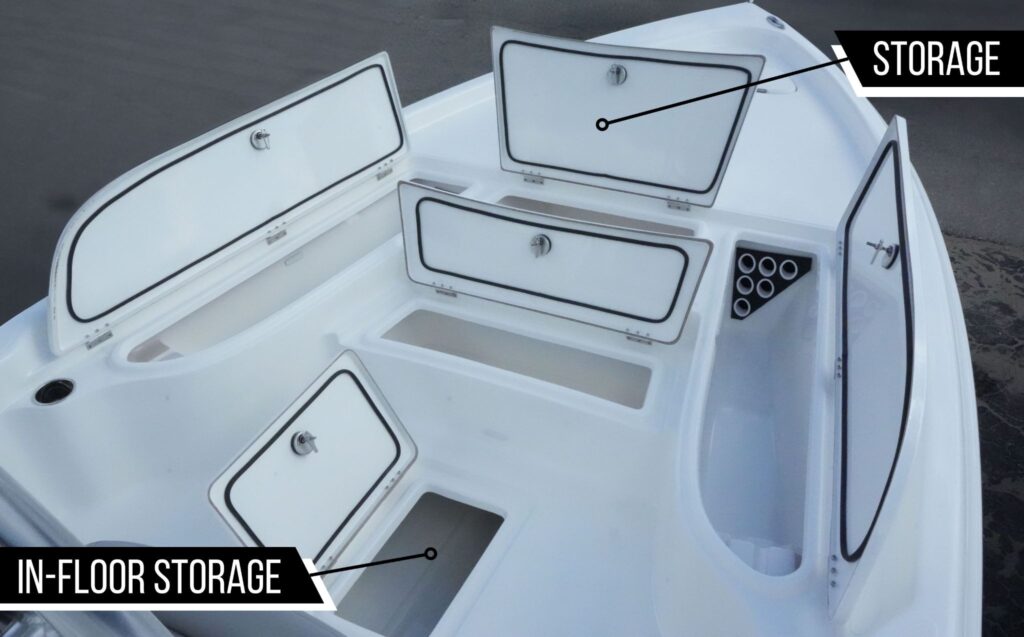
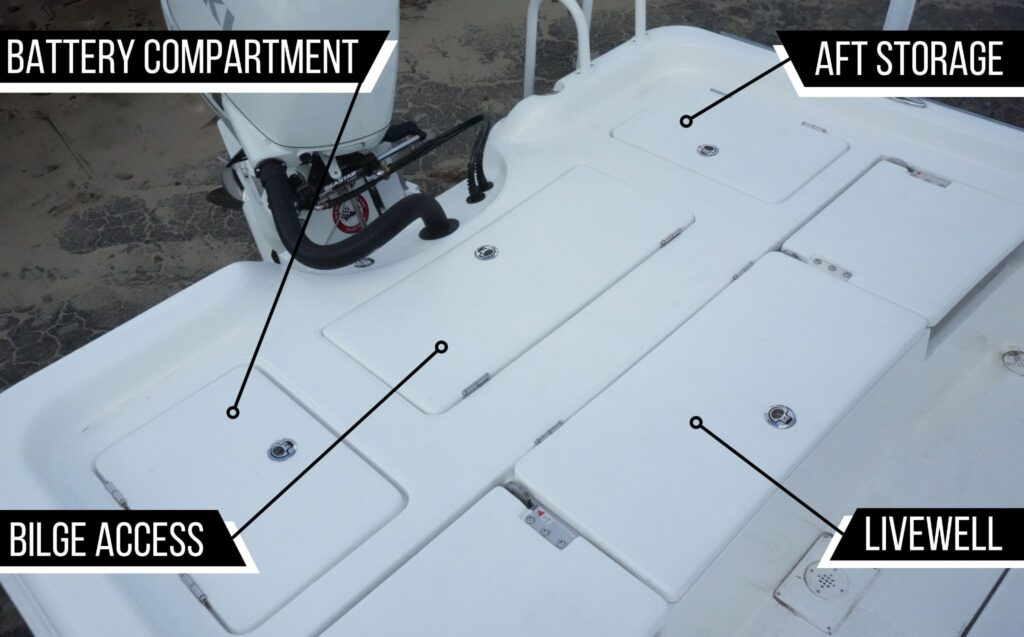
The Purebay 2200 is a slightly smaller version of the 2400, with its overall length coming out to 21 feet and 4 inches. The front deck design is very similar with the same livewell seat with backrest design as the larger model. The 2200 also has a double bolster lean post as the console with a similar layout on the aft deck, just without the battery compartment and additional storage.
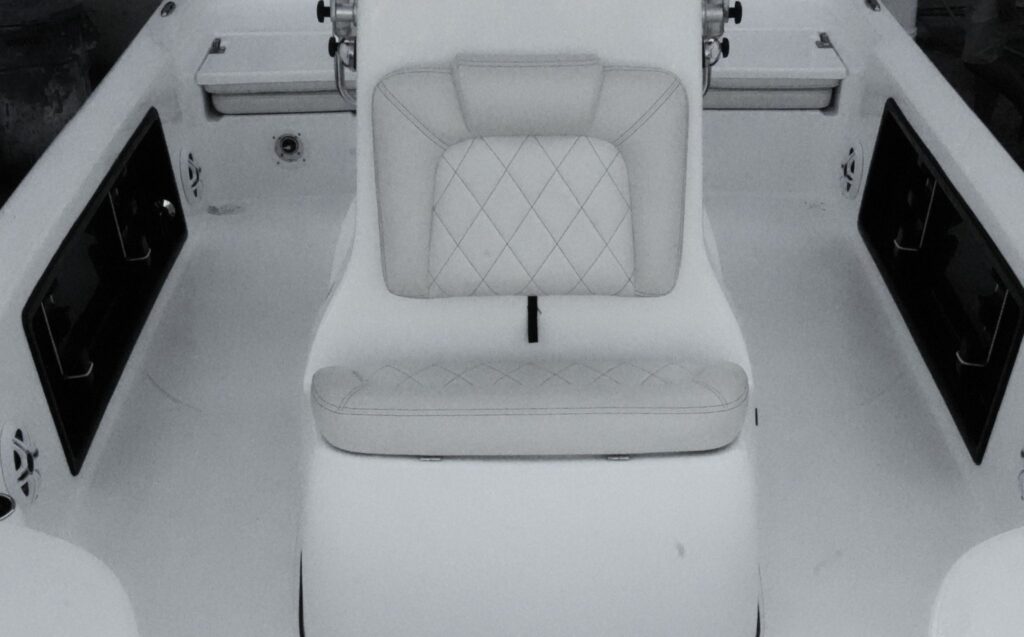
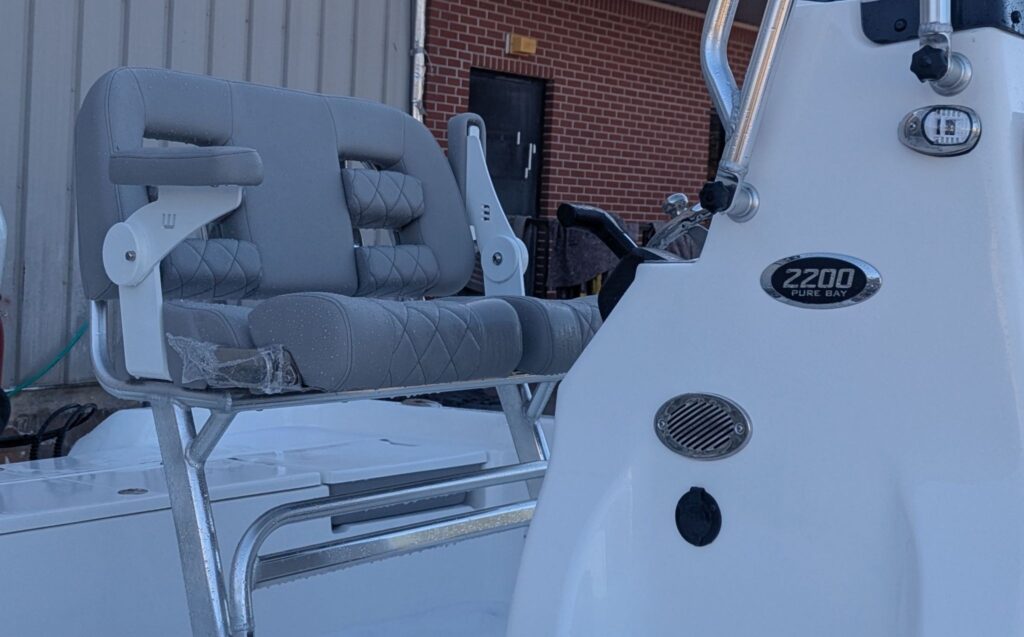
These two models offer everything you need to keep up with other professional anglers without overspending your budget. The Purebay series is ideal for anglers that want the premium experience that Blazer Bay is known for while still being financially conscious.
Whether you prioritize comfortability, performance, versatility, or price, Blazer Boats has a model that is sure to fit your needs. For a full look at Blazer Bay’s catalog, visit our boat overview page which gives a quick look at every model we have to offer complete with build-a-boat capabilities and full model overviews.