
A bay boat that looks great on paper can still miss the mark once it hits your water. Maybe the casting deck feels perfect for sight fishing, but the seating falls short for family runs. Maybe the livewell is right, but the storage layout fights the way you actually fish. That is why knowing how to customize a bay boat starts with one question – what do you need this boat to do most often?
The best custom builds are not built around trends. They are built around your water, your style of fishing, your crew, and your expectations for performance. A serious inshore angler running shallow grass flats has different priorities than a family that spends Saturday chasing redfish in the morning and cruising the bay in the afternoon. The right setup delivers both confidence and efficiency. The wrong one adds cost, weight, and compromises you feel every trip.
How to customize a bay boat for the way you fish
Start with your real use case, not your idealized one. If 70 percent of your trips are solo or two-man fishing runs, your layout should favor deck space, rod access, livewell capacity, and easy movement from bow to stern. If your crew often includes kids or non-anglers, comfort features deserve more weight. A bay boat can absolutely serve both jobs, but every choice affects something else.
Hull size and overall layout are where that balance begins. A longer boat generally gives you a better ride, more storage, and more room to separate fishing space from passenger space. It also means more weight, more power, and a different feel in shallow water. A smaller hull may be easier to tow, easier to store, and quicker to set up for skinny-water fishing, but it will not offer the same cockpit room or rough-water confidence.
Think honestly about where you run. Protected bays, open sounds, backcountry creeks, and nearshore passes all ask different things from a boat. If you regularly cross choppy water to get to your spots, prioritize ride quality and hull confidence before adding cosmetic upgrades. Performance always matters more than flash.
Build around your primary fishing style
If you spend most of your time casting artificials, a clean deck matters. Flush hardware, open bow space, smart rod storage, and a trolling motor setup may be more valuable than extra seating. If you fish live bait, livewell design becomes a bigger deal. Capacity matters, but so does placement, pump quality, and how easy it is to reach without disrupting the flow of the boat.
For anglers who split time between inshore and nearshore water, versatility should drive the build. That usually means a layout that keeps the cockpit open, enough freeboard for confidence, and storage that can handle a range of tackle instead of one narrow technique. This is where a purpose-built bay boat separates itself from a generic compromise.
Pick performance upgrades before cosmetic ones
When people think about how to customize a bay boat, they often jump straight to colors, upholstery, and electronics. Those choices matter, but the smartest money goes into the features that affect ride, fishability, and reliability every time you leave the dock.
Engine selection is one of the biggest decisions in the entire build. More horsepower can mean faster hole shot, stronger top-end speed, and better load-carrying confidence with a full crew, fuel, and gear. It can also mean more fuel burn and a different price point. If you regularly run long distances or fish tournaments where time matters, higher horsepower may be worth every bit of it. If most of your trips are short and local, the max rating may not be necessary.
Jack plates are another major performance decision. The right setup can improve shallow-water capability, help dial in running attitude, and give you more flexibility across changing conditions. But if you rarely fish shallow and mostly run open bay water, that money might work harder elsewhere.
Power options at the bow also deserve careful thought. A trolling motor is almost essential for anglers who fish structure, shorelines, or schools where boat control makes the difference. If stealth and precision are part of your style, build for it from the start instead of treating it like an afterthought.
Electronics should match how you operate
Big screens look impressive, but they should earn their space. A serious angler may want multiple displays, clean console integration, and room to monitor charting, sonar, and engine data at the same time. A more casual owner may be better served by a simpler setup that keeps the helm uncluttered and easy to use.
The same goes for transducers, audio, and accessory switches. If you fish before daylight, run in changing conditions, or spend full days on the water, visibility and control matter. Organize the helm for quick decisions, not showroom photos.
Customize the deck layout for efficiency
The deck is where your day actually happens. Storage, seating, livewell access, and casting space should work together instead of competing with each other.
Start with storage. You want rods, tackle, safety gear, and personal items to have a home that makes sense. Too little storage creates clutter. Poorly placed storage slows you down. Think about what needs to stay close at hand and what can stay stowed until you need it. Tournament anglers usually want speed and access. Family crews may value dry storage and convenience just as much.
Seating is one of the biggest trade-offs in any bay boat build. More seating improves comfort and makes the boat more welcoming for guests. It also takes space away from open deck area and can change the fishing feel of the boat. If your boat has to serve both anglers and family, removable or convertible seating can be the smartest middle ground.
Livewell configuration is another place where the details matter. One well may be enough for your style, or you may want multiple options to separate bait from catch or support different techniques. Capacity, shape, pump quality, and lid placement all affect how useful the system really is on the water.
Don’t overlook comfort if you use the boat all day
A true custom build should support long days, not just quick photos at the ramp. That means considering leaning post design, backrest support, shade options, and how passengers move through the cockpit. Hardcore anglers sometimes dismiss comfort features until they spend six hours in rough chop or bring the family aboard on a hot summer afternoon.
Comfort does not have to soften the boat’s edge. Done right, it makes the boat more capable because it keeps everyone fresher, safer, and more willing to stay out longer.
Choose finishes that hold up, not just stand out
Color packages, upholstery choices, and trim details are part of the fun, but they should still fit the way you use the boat. Light interiors can look sharp and stay cooler in the sun, but they may show wear faster. Darker accents can bring a more aggressive look, though they may demand more upkeep in a saltwater environment.
Ask yourself how much maintenance you are really willing to do. A custom bay boat should turn heads, but it also needs to stay sharp after repeated use, fish slime, sunscreen, salt spray, and trailering. The best finish package is one that still looks right after a full season of hard use.
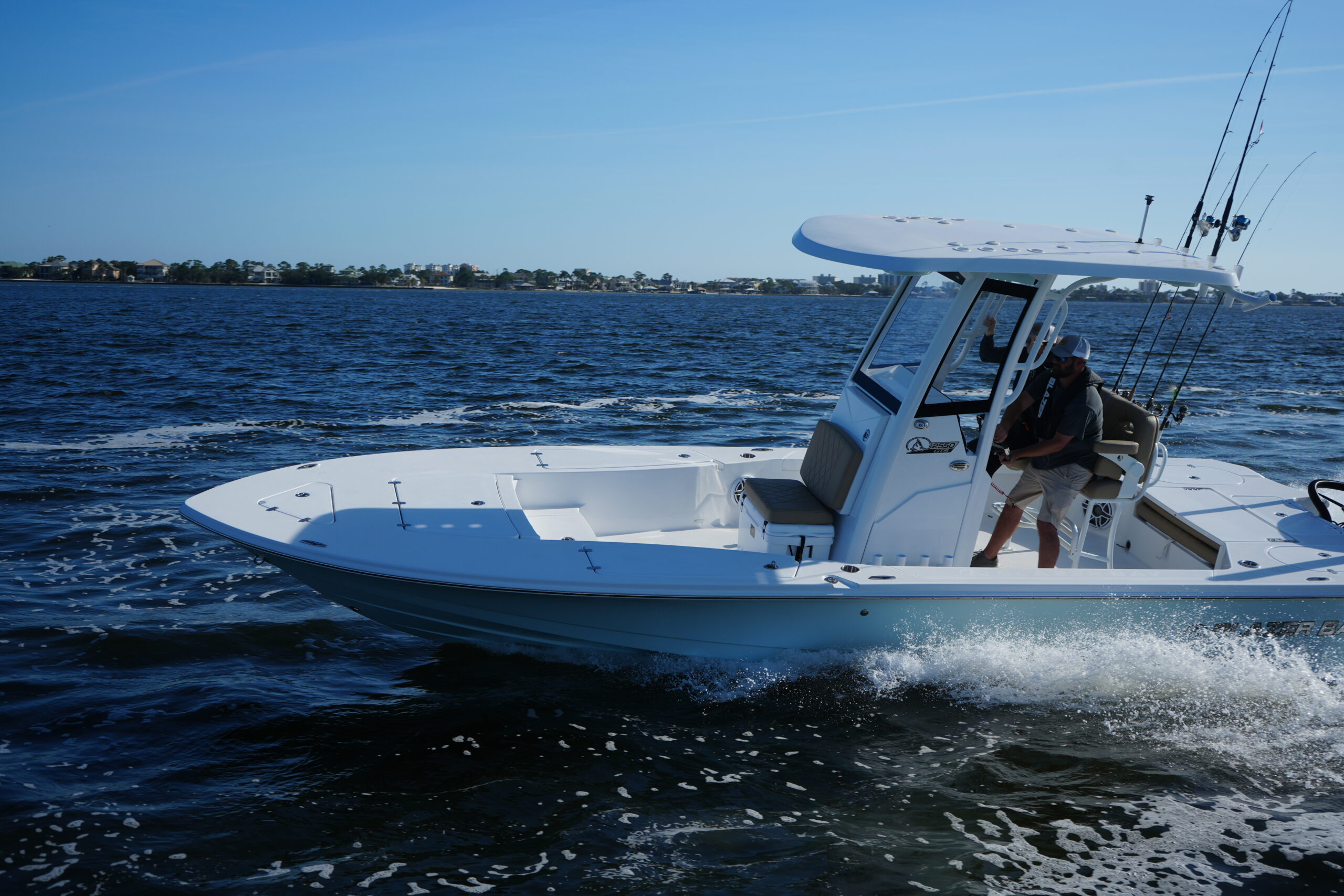
This is where brand-level build quality matters. A custom boat only makes sense if the platform underneath it is built to perform and built to last. That is why experienced buyers lean toward manufacturers with a real saltwater background, strong design credibility, and proven bay boat performance, like Blazer Boats.
Avoid the most common customization mistakes
The biggest mistake is overbuilding for the rare trip instead of the normal one. If you outfit the boat for the one offshore run you make each season, you may hurt the efficiency and simplicity you need for the other 95 percent of your time on the water.
The second mistake is letting options pile up without a clear priority. Extra features add cost, complexity, and often weight. More is not always better. Better is better.
The third mistake is ignoring resale. A highly personalized build can be a great decision if it truly fits your life, but extremely narrow choices may limit appeal later. The sweet spot is a boat that feels tailored without becoming too specialized to move when the time comes.
The best custom bay boats are the ones that feel right every time you step aboard. They run the way you want, fish the way you need, and still have the comfort and layout to make a full day on the water feel like time well spent. Build for your real priorities, and your boat will not just look custom – it will perform like it was built for you, because it was.