
Tournament morning exposes every weak link in a rig. If your livewell can’t keep bait healthy, your deck feels crowded, or your hull pounds in open water, you’re already behind. A true tournament ready bay boat is built to run hard, fish clean, and keep performing when the weather, tide, and pressure stop being friendly.
That standard is higher than simply owning a bay boat with a big motor and a few casting decks. Serious anglers need a platform that can cover water fast, hold its composure in a chop, fish shallow when the pattern shifts, and still carry the storage, rigging, and crew confidence required for a full day of competition. The best rigs do all of that without giving up comfort or control.
What separates a tournament ready bay boat
The difference starts with purpose. A recreational bay boat can be versatile and enjoyable, but a tournament rig has to be efficient under pressure. Every feature needs to help you fish harder, move faster, and waste less time.
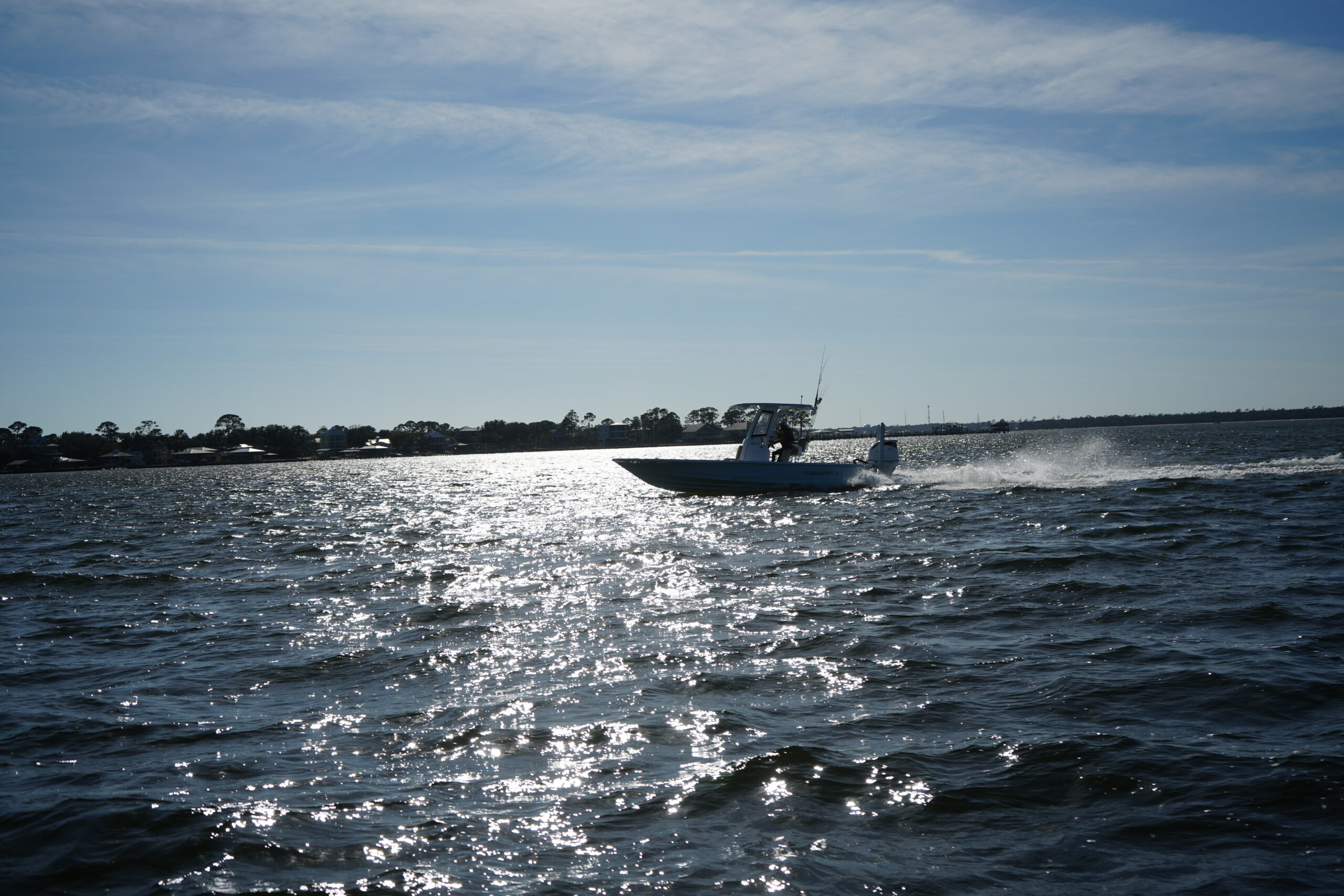
Speed matters, but not for bragging rights alone. In a tournament, speed means beating the crowd to a first stop, making a long run before conditions change, and giving yourself more fishable minutes. That only counts if the hull stays planted, dry, and predictable when the wind builds. A fast boat that beats up the crew or forces you to back off the throttle too early is not helping you win.
Fishability is the next line in the sand. Wide, stable casting decks matter because missed footing and cramped movement cost opportunities. Clean deck layouts matter because loose gear, awkward hatches, and poor rod placement slow every bait change and every adjustment. Livewells matter because dead bait and stressed fish ruin a day in a hurry. Tournament ready means the boat supports the pace of competitive fishing, not just the idea of it.
Hull performance is the foundation
A serious bay boat starts with hull design. If the hull does not deliver a smooth and remarkably dry ride, everything else becomes secondary. Anglers in the Gulf, along Atlantic coastlines, and across big inshore systems know the day rarely stays flat. One run may be protected and slick, while the next requires crossing open, wind-blown water.
That is where hull balance shows up. You want a ride that can handle nearshore chop without losing the shallow-water capability that makes a bay boat such a deadly all-around fishing machine. Too much hull focused on open-water comfort can compromise draft and shallow access. Too much emphasis on skinny-water running can leave the boat harsh and wet when conditions stack up. The right setup lives in the middle – capable, aggressive, and confident across changing water.
A tournament ready bay boat also needs predictable handling at speed. Sharp turns, crowded ramps, rough boat wakes, and fast course corrections are part of real-world use. The boat should track clean, respond with confidence, and never feel sketchy when you are running hard with a full load.
Deck layout has to work under pressure
Tournament fishing is all about repeated motion. Open a hatch. Grab a rod. Change a bait. Net a fish. Refill a livewell. Move to the bow. Repeat it all day. A boat that interrupts that rhythm is a problem.
That is why deck space matters so much. The bow has to be large enough for confident casting without forcing awkward footwork. The aft deck needs to support fishing, access, and landing fish without becoming cluttered. Storage needs to be generous, but more importantly, it needs to be placed where it makes sense. If your most-used tackle, tools, and safety gear require extra steps or force you to dig, the layout is working against you.
Rod storage is another separator. Long rods, multiple techniques, and quick changes are standard in serious inshore fishing. A tournament setup should keep rods protected, organized, and easy to reach. Nobody wants to waste prime tide digging around for the one rod they need.
Livewell design deserves the same attention. Capacity is important, but so is circulation, placement, and ease of access. Whether you are carrying bait or managing a tournament catch, livewells have to perform in heat, chop, and long runs. This is one of those areas where buyers should be picky, because failure here is expensive.
Power and range are part of the equation
A tournament ready bay boat needs horsepower that matches the hull. Underpowering a premium bay boat usually shows up in all the wrong places – slower hole shot, weaker midrange response, reduced load-carrying confidence, and less ability to maintain efficient cruise in rougher conditions.
That does not mean every buyer needs maximum horsepower. It depends on where and how you fish. If your tournaments involve long runs, multiple crew members, full fuel, and heavy gear, higher horsepower makes strong sense. If your water is tighter and your runs are shorter, the sweet spot may be below the top rating. The point is simple: tournament use asks more from the package, so motor selection should reflect that reality.
Range matters too. Competitive days can include long runs, scouting, relocating, and weather-based detours. A bay boat built for tournament use should carry enough fuel to give anglers freedom instead of forcing conservative decisions too early in the day.
Electronics and rigging should support decisions, not distract from them
Modern tournament fishing leans heavily on electronics, trolling motors, shallow-water anchors, jack plates, and advanced rigging. A serious boat should be ready for that load. Clean rigging, smart helm layout, and room for large displays are not luxury items anymore. They are part of how anglers read water, manage boat positioning, and stay efficient.
The helm should be straightforward and command-focused. At speed, the captain needs clear visibility, easy access to controls, and confidence in the layout. At rest, the boat should support precision boat control just as well as it supports long-distance running.
This is also where customization matters. The strongest bay boats are not one-size-fits-all packages. Serious buyers want to configure electronics, seating, power options, deck features, and fishing accessories around how they actually use the boat. That is a major advantage for anglers who split time between hardcore tournament days and family trips.
A tournament ready bay boat still has to be comfortable
Hardcore anglers know comfort is not a soft feature. It is a performance feature. If the ride is punishing, the seats offer poor support, or the layout wears out passengers and crew, the boat becomes harder to use over a full day. Fatigue affects decisions, focus, and confidence.
That matters in competition, and it matters even more if you expect your bay boat to pull double duty. A lot of buyers are not shopping for a single-purpose machine that sits idle between events. They want one boat that can chase redfish on Saturday, run nearshore with confidence, and take the family out on Sunday without feeling stripped down or compromised.
That blend is where a premium builder earns its reputation. Boats with lounge seating, smart passenger comfort, premium fit and finish, and real storage flexibility give owners more reasons to use the rig. A tournament ready setup should never force you to choose between fishability and family appeal if the platform is designed correctly.
Why build quality still decides long-term value
Specs sell attention. Build quality earns loyalty. In this category, serious buyers pay attention to construction, hardware, finish work, and how the boat holds up after seasons of use in saltwater conditions. A bay boat can look impressive on day one and still become a headache if the details are weak.
That is why manufacturing experience matters. Proven builders understand how to combine performance, layout, and durability in ways that hold up over time. Blazer Boats has built its reputation by delivering high-performance fishing platforms with the kind of customization, fishability, and ride quality anglers expect when they are buying for more than occasional use.
For tournament-minded owners, that matters because ownership is not just about launch-day excitement. It is about repeat performance, resale confidence, and knowing your boat is ready when the next event, weather window, or family weekend shows up.
Choosing the right tournament ready bay boat for your style
The best choice depends on your water, your priorities, and how hard you expect the boat to work. If your focus is shallow inshore competition with occasional open-water runs, your balance point may lean toward draft, deck access, and quick setup efficiency. If your fishing regularly crosses into rougher bays and nearshore conditions, hull ride, freeboard, and big-water confidence become more important.
That does not make one style right and another wrong. It means the best tournament ready bay boat is the one that fits your real-world use without excuses. Look for a hull that runs strong, a layout that fishes clean, storage that supports your system, and enough comfort to keep the boat valuable beyond tournament day.
When a bay boat gets all of that right, it stops being just another rig on the trailer. It becomes a platform you can trust to compete, adapt, and keep delivering long after the weigh-in is over.